Wednesday, June 22, 2011

Tuesday, June 21, 2011
Stop Saying the US is a Nation of Immigrants
Stop Saying the US is a Nation of Immigrants!

Message to the Immigrant Rights Movement:
From the website of US Congressman Luis Gutierrez
Immigration
"The United States is a proud nation of immigrants. Like the generations who came before, the most recent newcomers want what all Americans want: to raise strong families, build safe communities, to practice their faith in freedom and to seek new and better opportunities for their children."
http://www.peopleofcolororganize.com/history/stop-nation-immigrants/
Stop Saying This Is a Nation of Immigrants!
This article, written a few years back but relevant today, is an important point in reframing the immigrant-rights debate. Moreover, the nation-of-immigrants argument by immigrant-rights advocates fails to acknowledge history in order to wed immigrants, often the victims of exploitation, as loyalists to that history. Far more has been written on this topic, especially the anti-Black implications of many positions, but this piece is a critical comment about which organizers should be aware.
By Roxanne Dunbar-Ortiz
A nation of immigrants: This is a convenient myth developed as a response to the 1960s movements against colonialism, neocolonialism, and white supremacy. The ruling class and its brain trust offered multiculturalism, diversity, and affirmative action in response to demands for decolonization, justice, reparations, social equality, an end of imperialism, and the rewriting of history — not to be “inclusive” — but to be accurate. What emerged to replace the liberal melting pot idea and the nationalist triumphal interpretation of the “greatest country on earth and in history,” was the “nation of immigrants” story.
By the 1980s, the “waves of immigrants” story even included the indigenous peoples who were so brutally displaced and murdered by settlers and armies, accepting the flawed “Bering Straits” theory of indigenous immigration some 12,000 years ago. Even at that time, the date was known to be wrong, there was evidence of indigenous presence in the Americas as far back as 50,000 years ago, and probably much longer, and entrance by many means across the Pacific and the Atlantic — perhaps, as Vine Deloria jr. put it, footsteps by indigenous Americans to other continents will one day be acknowledged. But, the new official history texts claimed, the indigenous peoples were the “first immigrants.” They were followed, it was said, by immigrants from England and Africans, then by Irish, and then by Chinese, Eastern and Southern Europeans, Russians, Japanese, and Mexicans. There were some objections from African Americans to referring to enslaved Africans hauled across the ocean in chains as “immigrants,” but that has not deterred the “nation of immigrants” chorus.
Misrepresenting the process of European colonization of North America, making everyone an immigrant, serves to preserve the “official story” of a mostly benign and benevolent USA, and to mask the fact that the pre-US independence settlers, were, well, settlers, colonial setters, just as they were in Africa and India, or the Spanish in Central and South America. The United States was founded as a settler state, and an imperialistic one from its inception (“manifest destiny,” of course). The settlers were English, Welsh, Scots, Scots-Irish, and German, not including the huge number of Africans who were not settlers. Another group of Europeans who arrived in the colonies also were not settlers or immigrants: the poor, indentured, convicted, criminalized, kidnapped from the working class (vagabonds and unemployed artificers), as Peter Linebaugh puts it, many of who opted to join indigenous communities.
Only beginning in the 1840s, with the influx of millions of Irish Catholics pushed out of Ireland by British policies, did what might be called “immigration” begin. The Irish were discriminated against cheap labor, not settlers. They were followed by the influx of other workers from Scandinavia, Eastern and Southern Europe, always more Irish, plus Chinese and Japanese, although Asian immigration was soon barred. Immigration laws were not even enacted until 1875 when the US Supreme Court declared the regulation of immigration a federal responsibility. The Immigration Service was established in 1891.
Buried beneath the tons of propaganda — from the landing of the English “pilgrims” (fanatic Protestant Christian evangelicals) to James Fennimore Cooper’s phenomenally popular “Last of the Mohicans” claiming “natural rights” to not only the indigenous peoples territories but also to the territories claimed by other European powers — is the fact that the founding of the United States was a division of the Anglo empire, with the US becoming a parallel empire to Great Britain. From day one, as was specified in the Northwest Ordinance that preceded the US Constitution, the new republic for empire (as Jefferson called the US) envisioned the future shape of what is now the lower 48 states of the US. They drew up rough maps, specifying the first territory to conquer as the “Northwest Territory,” ergo the title of the ordinance. That territory was the Ohio Valley and the Great Lakes region, which was filled with indigenous farming communities.
Once the conquest of the “Northwest Territory” was accomplished through a combination of genocidal military campaigns and bringing in European settlers from the east, and the indigenous peoples moved south and north for protection into other indigenous territories, the republic for empire annexed Spanish Florida where runaway enslaved Africans and remnants of the indigenous communities that had escaped the Ohio carnage fought back during three major wars (Seminole wars) over two decades. In 1828, President Andrew Jackson (who had been a general leading the Seminole wars) pushed through the Indian Removal Act to force all the agricultural indigenous nations of the Southeast, from Georgia to the Mississippi River, to transfer to Oklahoma territory that had been gained through the “Louisiana Purchase” from France. Anglo settlers with enslaved Africans seized the indigenous agricultural lands for plantation agriculture in the Southern region. Many moved on into the Mexican province of Texas — then came the US military invasion of Mexico in 1846, seizing Mexico City and forcing Mexico to give up its northern half through the 1848 Treaty of Guadalupe Hidalgo. California, Arizona, New Mexico, Colorado, Utah, Texas were then opened to “legal” Anglo settlement, also legalizing those who had already settled illegally, and in Texas by force. The indigenous and the poor Mexican communities in the seized territory, such as the Apache, Navajo, and Comanche, resisted colonization, as they had resisted the Spanish empire, often by force of arms, for the next 40 years. The small class of Hispanic elites welcomed and collaborated with US occupation.
Are “immigrants” the appropriate designation for the indigenous peoples of North America? No.
Are “immigrants” the appropriate designation for enslaved Africans? No.
Are “immigrants” the appropriate designation for the original European settlers? No.
Are “immigrants” the appropriate designation for Mexicans who migrate for work to the United States? No. They are migrant workers crossing a border created by US military force. Many crossing that border now are also from Central America, from the small countries that were ravaged by US military intervention in the 1980s and who also have the right to make demands on the United States.
So, let’s stop saying “this is a nation of immigrants.”
Roxanne Dunbar-Ortiz is a long-time activist, university professor, and writer. In addition to numerous scholarly books and articles, she has written three historical memoirs, Red Dirt: Growing Up Okie (Verso, 1997), Outlaw Woman: Memoir of the War Years, 1960-1975 (City Lights, 2002), and Blood on the Border: A Memoir of the Contra War (South End Press, 2005) about the 1980s contra war against the Sandinistas.
Origins of Racial Profiling in the State of Arizona
http://www.nahuacalli.org/News.html
It's not a question, it's a quest.
Monday, June 20, 2011
LA HUELGA DEL PUEBLO!
YouTube:
by the
Comités de Defensa del Barrio at Phoenix Concert
"Hay conciencia: Somos Pueblo Unido - y va ver consecuencias."
In violation of the dignity and spirit of solidarity with the most affected members of our collective community, a concert by Luis Miguel was promoted by business interests loyal to the economic elites of the state of Arizona, both Anglo and Hispanic, on Sunday June 19, 2011 in Phoenix.
!Ya Basta!
Message:
To those who would dismantle the Sound Strike by attempting to co-opt, corrupt and denigrate the movement to achieve Social Justice and Human Rights in Arizona for all,
!!El PUEBLO ESTA EN HUELGA!!
Boycott Arizona Petition Site
- Target: Jan Brewer, Governor of Arizona, John McCain, US Senator, Jon Kyl, US Senator, Arizona Chamber of Commerce and Industry, Arizona Office of Tourism
- Sponsored by: Javier Solis
Boycott the State of Arizona by vowing not to spend your vacation dollars in that state, whether that be by not engaging in tourism in Arizona, by not doing business within the state, or by not buying anything that comes from Arizona, (paying specific attention to corporations and businesses that support these mean spirited laws like SB1070, as well as, those supporting the likes of Sherrif Joe Arpaio and Senator Russell Pearce) until such a time that this law is overturned or ruled unconstitutional.
Racial profiling and discrimination in any way, shape, or form, against any race or ethnic community, must not be tolerated. We must all stand together regardless of our racial and ethnic background. Immigration is a matter for the federal authorities to handle and should not to be delegated to the average police officer who is not trained in immigration law.
*******
Unase a la lucha y promete ser parte de la huelga "Boycott" en contra de Arizona! Prometa no usar su dinero de sus vacaciones o viajes, ni en productos, servicios, ni en nada de negocios, que tenga que ver con el Estado de Arizona (especificamente en contra de corporaciones y negocios que apoyan a leyes como la SB1070 y en contra de los que apoyan aquellos como el Alguacil Joe Arpaio y el Senador Russell Pearce) hasta que se anule esta ley SB1070, o hasta que sea declarada incontistucional.
La discriminacion, en todas sus formas, en contra de cualquier raza o comunidad, no se debe tolerar jamas. Todos debemos estar unidos en esta pelea, no importa de que raza o pais seamos. La inmigracion es un asunto del gobierno federal y no se debe delegar esta responsabilidad a unos policias comunes los cuales no saben de las leyes federales, y mucho menos de la inmigracion.
Boycott Intolerance
SIGN THE PLEDGE


Join a growing number of groups across the country in taking a stand against the radical Arizona law, SB 1070. Sign here to protest the injustice that this law perpetrates, and join us in boycotting Arizona.
LINK:

Sunday, June 19, 2011
History of the Boycott
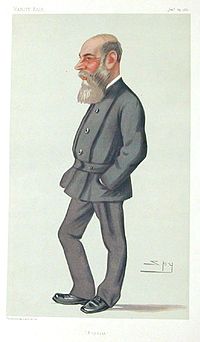 |
Charles C. Boycott |
From Wikipedia:
A boycott is an act of voluntarily abstaining from using,
buying, or dealing with a person, organization, or country as an
expression of protest, usually for political reasons. It can be a form of consumer activism.
Etymology
Boycott then attempted to evict eleven tenants from the land. Charles Stewart Parnell, in a speech in Ennis prior to the events in Lough Mask, proposed that when dealing with tenants who take farms where another tenant was evicted, rather than resorting to violence, everyone in the locality should shun them. While Parnell's speech did not refer to land agents or landlords, the tactic was first applied to Boycott when the alarm was raised about the evictions. Despite the short-term economic hardship to those undertaking this action, Boycott soon found himself isolated — his workers stopped work in the fields and stables, as well as in his house. Local businessmen stopped trading with him, and the local postman refused to deliver mail.[1]
The concerted action taken against him meant that Boycott was unable to hire anyone to harvest the crops in his charge. Eventually 50 Orangemen from Cavan and Monaghan volunteered to do the work. They were escorted to and from Claremorris by one thousand policemen and soldiers, despite the fact that the local Land League leaders had said that there would be no violence from them, and in fact no violence materialized.[2] This protection ended up costing far more than the harvest was worth. After the harvest, the "boycott" was successfully continued. Within weeks Boycott's name was everywhere. It was used by The Times in November 1880 as a term for organized isolation.
According to an account in the book “The Fall of Feudalism in Ireland” by Michael Davitt, the term was promoted by Fr. John O'Malley of County Mayo to "signify ostracism applied to a landlord or agent like Boycott". The Times first reported on November 20, 1880: “The people of New Pallas have resolved to 'boycott' them and refused to supply them with food or drink.” The Daily News wrote on December 13, 1880: “Already the stoutest-hearted are yielding on every side to the dread of being 'Boycotted'.” By January of the following year, the word was being used figuratively: "Dame Nature arose.... She 'Boycotted' London from Kew to Mile End" (The Spectator, January 22, 1881).

Subscribe to:
Posts (Atom)