Monday, February 18, 2013

Declaración de México - Tenochtitlan 2010


Adital
Desde la esencia de esta tierra de profunda historia y cobijados con el espíritu de la Gran Tenochtitlan… cuyo corazón sigue latiendo y con la ayuda de los guardianes de este lugar, que nos hacen confluir para hablar de nuestras raíces ancestrales….
Bajo la idea de que a un estado corresponde una nación, los pueblos y naciones del Abya Yala hemos estado excluidos de los proyectos económicos, sociales, políticos y culturales que se han ido forjando en nuestros territorios, pero mantenemos en la resistencia nuestras culturas, lenguas y valores.  Hoy, el modelo neoliberal, nos mantiene en una situación de exclusión, de explotación económica, de imposición de un modelo educativo que nos disminuye y discrimina, de una dominación cultural, social y política en todos los ámbitos de nuestra vida y bajo una práctica de saqueo y despojo de nuestros recursos naturales, de migración por causa de la pobreza y falta de trabajo, y de una falta de reconocimiento pleno de nuestros derechos; por ello, los hombres y mujeres de las naciones y pueblos indígenas somos extranjeros en nuestras propias tierras.
 
Los pueblos Indígenas de Abya Yala [las Américas] y el Caribe, hemos venido luchando por el reconocimiento de nuestros derechos políticos y humanos colectivos, identidad, cosmovisión, autodeterminación, tierra, territorios así como la administración de nuestros recursos; esta lucha ha permitido avanzar en el reconocimiento de un marco jurídico internacional sobre derechos indígenas, siendo uno de los logros más recientes, la Declaración sobre Derechos de los Pueblos Indígena de la ONU.
 
A la mayoría de los gobiernos, no les interesa el desarrollo de los pueblos indígenas, sino que se coluden con los intereses de las grandes transnacionales, acondicionando los marcos jurídicos nacionales para despojar a nuestros pueblos indígenas. Y actualmente los Estados están festejando el Bicentenario de las llamadas Independencias de Abya Yala.

Ante esta situación, los movimientos indígenas del Abya Yala  tenemos varios desafíos que debemos analizar, reflexionar y establecer compromisos de acción, así como objetivos de corto, mediano y largo plazo para recuperar y ejercer derechos como la libre determinación y la autonomía, de definición de líneas alternas de desarrollo y de aportar nuestra experiencia cultural milenaria a la tarea de refundación de los estados nacionales para construir los nuevos estados plurinacionales.

 
Desde el seno de la Gran Tenochtitlan valoramos y apoyamos las luchas de resistencia y defensa de las tierras y territorios que se han realizado y se seguirán haciendo por nuestros pueblos indígenas y afrodescendientes, porque para nosotros no existe vida, ni cultura ni futuro, sin tierras y territorios. Y porque debemos mantener la herencia que debemos dejar a nuestros hijos. Por ello exigimos a los gobiernos de los Estados-Nación la desmilitarización de nuestros territorios y la derogación de las actuales leyes agrarias que atentan contra nuestros derechos. Especial indignación nos causa la privatización de nuestras tierras, la concesión de proyectos mineros y de explotación privada del agua en nuestros territorios. 
 
La humanidad, de la que somos parte, vivimos una enorme crisis mundial: financiera, ambiental, energética, alimentaria, de salud, de valores y en general hay crisis en todos los estados-nación que mercantilizan la vida y los bienes de la Pachamama, de la madre tierra, vulnerando derechos, soberanías y hoy estamos a un paso de la hecatombe planetaria. Por eso responsabilizamos a los estados desarrollados por la crisis climática del mundo; por eso pedimos que se cumpla el protocolo de Kioto y se acepte la propuesta del Buen Vivir.
 
Con base en lo anterior y como producto del Encuentro de Pueblos Indígenas Originarios y afrodescendientes: 

 
Proponemos:
 
• La construcción de nuevos proyectos de Estados-Nación, con inclusión de los pueblos indígenas y afrodescendientes, a través de un proceso de refundación de los Estados-Nación;
 

• Una nueva relación de respeto y de reconocimiento político de los  Estados-Naciones con los pueblos indígenas;
 

• La construcción de estrategias para el fortalecimiento del movimiento indígena continental a partir de las bases sociales de los pueblos, de las condiciones de organización locales y de las realidades socioculturales de las diferentes naciones existentes.
 

• La definición de estrategias para el pleno reconocimiento constitucional de los derechos de los pueblos indígenas, en cada país, con base en los instrumentos internacionales existentes;


• Luchar por la articulación y la unidad de los pueblos y naciones del Abya Yala y afrodescendientes, a realizar  un esfuerzo de acercamiento entre todos los actores sociales que los componen, como organizaciones indígenas, autoridades civiles, comunales, tradicionales y ejidales, profesionistas indígenas, intelectuales y líderes naturales de los pueblos indígenas de América.
 

• Construir alianzas con otros sectores  que compartimos la misma problemática y la misma memoria histórica, para comprometernos en hacer realidad una misma esperanza, la de un mundo mejor para los pueblos indígenas y no indígenas de la actualidad.
 

• Generar condiciones e impulsar los procesos de la libre determinación en el marco de las autonomías, con o sin reconocimiento legal, bajo el propósito de garantizar la supervivencia de los Pueblos y Naciones Indígenas; por tanto
 

• Participar activamente en la Cumbre Mundial del cambio climático a realizarse en México y que la voz de los pueblos y naciones indígenas sean escuchados para salvar la vida del planeta.
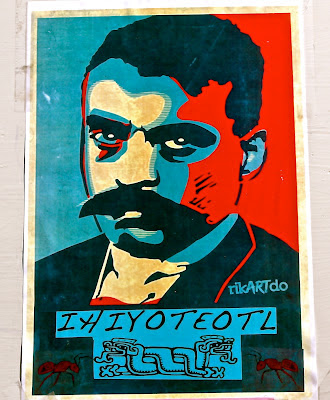
 NOS PRONUNCIAMOS POR:
 
• El reconocimiento y aplicación efectiva del Convenio 169 de la OIT y la Declaración Universal de los Derechos de los Pueblos Indígenas proclamada por la ONU, por los gobiernos de los actuales Estados-nación.
 

• El rechazo a los festejos del Centenario y Bicentenario al que se le han destinado presupuestos millonarios, ya que los pueblos indígenas y afrodescendientes no tenemos nada que celebrar.
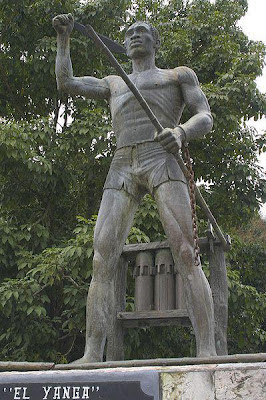
 

• El reconocimiento de los derechos de los pueblos Afrodescendientes de América y del Caribe y a su contribución cultural a la vida de nuestros pueblos y estados-nación.
 

• El respeto pleno a nuestras ceremonias ancestrales en los lugares sagrados y en los sitios donde nuestros abuelos expresaron sus adelantos civilizatorios y que hoy  mal llaman zonas arqueológicas.
 

• Respaldar y hacer nuestros los Acuerdos de la IV Cumbre Continental de los Pueblos Indígenas de Abya Yala, celebrada en Puno, Perú, así como la Declaración de los Derechos de la Madre Tierra, emitida recientemente en Cochabamba, Bolivia.
 

• El reconocimiento a la enorme participación y contribución de las mujeres indígenas en las luchas por la defensa de nuestros derechos.
 

• Los jóvenes indígenas ratificamos nuestra responsabilidad de mantener en alto la bandera de la resistencia indígena continental.
 

• El rechazo a la injerencia de partidos políticos, religiones e instituciones oficiales y privadas que han creado divisionismo y confrontación entre las comunidades y naciones indígenas.
 

• El rechazo a la existencia de toda frontera en los estados-nación del Abya Yala, porque nuestro territorio no tiene límites.
 

• El repudio a la ley SB 10 70 de Arizona EE.UU, por su carácter racista, discriminatorio, violatorio, antimigrante e inhumano. Los Pueblos Indígenas de Abya Yala, no somos inmigrantes en nuestro propio continente. 
 

• El rechazo a los cultivos transgénicos que atentan contra la vida y pedimos la unidad en la defensa, conservación y reproducción de las semillas nativas  y en especial el Maíz.
 

• Repudiamos los asesinatos que realizan los gobiernos de los estados-nación y fuerzas opresoras a luchadores indígenas, defensores de derechos humanos y periodistas. Exigimos justicia a los asesinatos de los compañeros Beatriz Alberta Cariño Trujillo y el observador finlandés Jyri  Antero Yaakkoola en la Caravana por la Paz para romper el cerco en que viven los triquis del municipio autónomo de San Juan Copala, los recientes asesinatos del líder triqui Timoteo Alejandro Ramírez y su esposa Cleriberta Castro en Yosoyuxi, Oax., así como el exterminio de los pueblos indígenas de Colombia y en especial los asesinatos de los hermanos y hermanas del pueblo nasa del Cauca Colombia y los de Bagua, Perú.
 

• Esperamos que la ley de derechos indígenas para la ciudad de México D. F. sea la base para la formulación de la futura Constitución de la ciudad capital en la que se reconozcan los derechos de los pueblos indígenas que viven en esta gran metrópoli.
 

• Proclamamos este encuentro como un lazo vinculante  de alianza y articulación de la lucha de los Pueblos Indígenas, originarios y afrodescendientes de América latina y del Caribe, con las fuerzas democráticas de México. 
 
¡POR LA UNIDAD Y AUTONOMÍA DE LOS PUEBLOS DEL ABYA YALA!
 
¡VIVAN LOS PUEBLOS DEL ABYA YALA!
 
Dado en México-Tenochtitlan, el 22 de mayo de 2010.

Tuesday, February 5, 2013

Citizenship, a Dangerous Western Concept

ICCI-ARY Rimay Bulletin, Year 6, No. 61, April 2004 (1)
Institute of Indigenous Science and Culture
Quito, Ecuador

Agustí Nicolau i Coll


In the process of redefinition of a renewed culture of citizenship, one must ask what is the place of the community dimension, in that this is the constitutive dimension of identity for every single human being.  Without community, human identity is non-existent, as it lacks its foundation and reason for existence.  The human being is from emergence a creature of community, and we can say that this community dimension is trans-cultural: i.e. it is present in all cultures.

This is the fundamental and vital reality through which as always and even now, the members of the most diverse cultures share and construct social life together with other human beings, with the cosmos, and their respective divinities.


 Rather, the concept of citizenship within a state is a relatively new reality, which appeared at a particular moment of time during the history of modern Western culture, namely the French Revolution.  We also note that in the very bosom of Western cultures the emphasis on citizenship can vary greatly from one culture to another.  It has become a major reference point in French culture but it is much less, for example, in Catalonia.  Outside of the context of western political space we also note that the importance of citizenship, as a reference point for organizing the lives of people is very relative, and even clearly harmful.

Without denying the positive impact that the concepts of citizenship and citizens have been able to contribute to society, we are forced to accept that these are not the only valid parameters to ensure a life of dignity and fulfillment for human beings.
 It seems therefore that a renewed culture of citizenship should not forget the community dimension, wanting simply reduce the “canon of community” to a “canon of citizenship”.  Indeed, the first precedes and forms the base for the second.  Such a change in perspective is required bring a reawakening to the reality the constitutive nature of community.

In this regard, let us indicate how alongside the abstract modern concepts of the individual, the collective and public culture in terms of state citizenship, the vital and existential experiences of the person and community culture are core dimensions of the human being and social reality. At the same time, we can address the issue of cultural pluralism and social cohesion from the perspective of community culture.  Finally, we will explore some tracks of action moving towards empowering the spirit of human community as the heart of our social life. 

Person and individual


Currently the words "person" and "individual" are used most of the time as synonyms.  But in fact, there is an essential difference between them.  The concept of individual refers mostly the autonomous self, who encounters self justification as a singularity then constitutes external environmental context by the establishment and exercise of rights, duties to fulfill, needs to be satisfied, taxes to pay, etc.  This social conception of “individual” works essentially on the basis of rationalism and functionalism.

As individual, one identifies being with thinking, freedom with the ability to choose, identity is a function of what one does and not what one is.  The individual, as an autonomous self, does not acquire meaning as part of a community, but as one more anonymous creature in the whole collective.

This concept of the autonomous individual is a distinction of Western culture, as it was developed especially in the age of Modernity and had its legal establishment with the French Revolution (2).  The positive aspects of individuality which are claimed as necessary in order to confront abuses of state power and authoritarianism, should not prevent us from noting, in turn, the excessive exaltation of individualism itself that has led human society to a dead ending.

Upon the meme of rugged individualism is constructed the basis of the current policies of economic liberalism, which is concerned only with individuals as consumers, in the same way that the state cares about them, as taxpayers and service users.  The forces of disintegration and social exclusion are given a clear field, as the community solidarities are absent or minimized in a space where individual autonomy has become the only horizon of our lives.  If the social exclusion which we are witnessing today is ultimately the result of economic liberalism along with the absence of the state in its commitment to society, we will find at a deeper level the ideology of the autonomous individual is the root of this process.  Without it, liberalism could not reduce us to mere consumers or the state to strictly numbers of a collective whole.  It appears necessary for a thorough revision of our conception of the autonomous individual in the capacity as the foundation of public society.

We could begin this review by taking into consideration the living reality of the person, which viewed rather from the perspective based primarily on conceptions of autonomy, is based on the relational and community dimensions.  The person is unique, and who says claims to be person relates as a singular node in relationship to others. The implications involve a comprehensive perspective not limited to the possession of rights, duties, requirements, taxes, trade, etc. but inclusive of all dimensions of their lives: their beliefs, their values, their worldview, their relationships, their dreams, their desires, which are not necessarily experienced in a private space, but are shared in a communal space. The person is a response to the question: who are you?

As a specificity of its own community, the person is full human member not of an abstract collectivity of anonymous citizens, but of a community life form of constant occurrence, of giving and of receiving from fellow humans.  Eventually, rather than only belonging to a community the person IS the community, a way of being which recreates the world in historical continuity as unique, non-repetitive and, at once - sacred experiences. 

Community (3) and Collective 

Parallel to the distinguishment in terms of conceptions of individuals and persons we can make the distinction between the collective and the community.  The collective is an aggregate of individuals.  It has its strength and purpose in numbers, in the law of majority rule.  More individuals make a collective stronger, fewer individuals make a collective weaker.  Its definition is essentially quantitative and is the basis of this quantification that the community is organized under the nation-state formula.  What counts in a collective is not so much the quality of relationships between its members as respect for individual rights and access to public services.

When talking about the participation of citizens in the affairs of the collective, we do not realize that this participation has become difficult, almost impossible, by the fact that the sense of belonging is not developed primarily within a community dimension. However, this feeling of belonging which itself is essential to every human being is not simply experienced only on a rational and objective level.  Belonging is a holistic social concept, which implies the whole being, with all human values, beliefs and symbols integrated.  These elements are as valid and essential as all the stipulations of all the constitutions and charters of rights and freedoms imaginable within the frame of the state.

Every truly human community consists not of individuals who operate as automatons within the autonomy of singularity as the horizon of life, but people who, through their interpersonal relationships with other community members, build a sense of durable place through the sharing of profound spiritual moments.  If the individual and the collective equate to produce disjointed points lost within a uniform mass, in contrast the person and the community make us think above all of the nodes in a net: without the nodes (the person) there is net (no community) and without the net (community) there are no nodes (persons).  Every human community draws strength from the quality and strength of the relationships established between the members. Strength is not measured numerically nor is it quantitative; it is a qualitative collective experience.

Unlike the concepts of citizenship and the collective, the community is not only limited to people alive today.  The community may also include the ancestors (for example as in African cultures) as well as those not yet born (such as American Indian cultures).  Even further, in many cases, the power of community which simply is the power of inclusion, can extend to the human reality of experience with the cosmos (nature) and the gods (the divine).  Such community relationships eventually include all living realities, which is a sense of community that is less anthropocentric and more holistic in its relationship to reality, and therefore more developed in reciprocity within sustainable ecological relationships.

But sadly, the community has often been seen as something to eliminate as an obstacle to the full development of the individual. This process has been well described by Bertrand Badie (4) :


"The individualization of social relations is considered, from the philosophy of the Enlightenment, and even more so with the nineteenth century evolutionism, as emancipatory and rationalizing: it gradually frees the individual from community allegiances and of the tutelage of his group of natural belonging.  Socialization leads to a freer and more critical self, who is distanced from a natural desire to elevate the group to be replaced by a rational singularity, making room for the individual calculation and evaluation (...). In this reading, all communitarianism can not be residual, void of tradition and destined to disappear: the governance of political systems goes through its reabsorption "(p.116-117).

This negative conception of the community dimension has been shared by the ideologies of both right and left in the Western political philosophy.  It is a fact of inherent prejudice within modern Western thought.

Community culture, social cohesion and cultural pluralism 

In defining anew the concept of citizenship, we find the desire to tackle the challenge of cultural pluralism, in order to eliminate risks to the possible dangers to social cohesion that pluralism might entail.  We refer then to a "public culture" which is generally defined within the framework of the nation state and is identified with the government of that state, its powers and the public sector including civil society as a whole.

It is very difficult to decipher the challenges of cultural pluralism with an approach based solely on constructs of common public culture.  The concept of the public, as referenced within the frame of the individual and the collective dimensions of the state, confuse social cohesion with standardization and homogenization.  These processes then prescribe which similarities will be the dominant common denominator in order to ensure social stability, hoping that cultural differences will disappear or, at least, will take refuge in private spaces.


But if we embed our perspective from within the culture of human community, the culture of that which is created and developed by peoples and communities themselves from their own life context, the intent of human life to develop, to assure conditions for the development of life in communion with the whole of humanity becomes determinant.  Indeed, the vision of social cohesion becomes radically different.  Community solidarity becomes especially essential, which within each particular cultural framework, functions to facilitate and bring into the world conditions to ensure a life of dignity and fulfillment.  A life of fulfillment that emerges organically from the peoples and communities in their aspirations, their outlook on life, their worldviews, their knowledge and their knowledge.  A natural world.  In this sense we can say that these communities possess complete cultural identity in terms of educational, social, medical, legal systems, etc. which need not be made to conform by force within the constricting guidelines of the state and its civic culture.


Social cohesion requires the sense of belonging to community by people, as it bequeaths a personalized social space that is palpable and non-anonymous, a space not formulated by abstract principles that are distant and uniform, but instead created by a distinct worldview of the world and the sum of experiences of human life.  It is from this common sense of human belonging that people can build relationships with others who do not share the same particular cultural community.  Upon the interfacings of these relationships can be cultivated social cohesion, and not reactionary denial of any of these belongings towards an abstract resolution of contradictions, that pretends to be objective, rational and standardizing.  The horizon of social experiences that serve to orient and define does not strive to pursue the common denominator but motivates to establish the spaces and places for dialogue and exchange between different communities.

If such dialogue takes place, there is sure to be a mutual enrichment among community cultures that would bring transformation for all without prescribing what direction these changes may empower.  It is with this orientation that the community cultural dialogue addresses the challenges of cultural pluralism, and not through a process of integration and assimilation within the “legal” framework of western rationality.

It should be noted that this dynamic is not unique to the challenges of addressing cultural pluralism issues related to "cultural communities" in the context of a "host society," but also the different conceptions and visions of life that can be found internally within the same "host society".  The assumption of homogeneity that is exposed in projecting in civic values ​​and worldviews is not sustainable.

Unfortunately, the omnipresence of the nation state and the public culture of citizenship have removed or has largely replaced in Western cultures the presence of community, which has rendered these very nearly invisible.  In contrast, observing the reality of surviving traditional community cultures, we find that community dynamics are based on the dynamics of society, much more than the formal relationship with the state and the culture of state citizenship (5). The presence of communities in Quebec for example, different from those of modern Western origin, together with the crisis of the state as a model of organization of social life, are example that could serve to reinforce a revival of community cultures in this sense.

Social exclusion and Community exclusion 

Another concern that we are forced to contend with at the present time as we redefine anew the parameters of modern citizenship is the phenomena of social exclusion, which currently rages in both the North and the South.  In particular our attention is especially called to address the issues of economic exclusion.  Poverty and misery have become increasingly uncontrollable social realities.  This exclusion is certainly the result, largely, of the lack of respect for the social contract on the part of economic liberalism and the nation state, but the simple formulation of a new social contract under a new citizenship seems insufficient.  It is necessary, in my view, to go further and have the courage to consider three key issues:

  • Is not the ideology of individual autonomy, the collective and the public culture of the nation state is the very source of this exclusion?
  • Can we realize the alternative of belonging within community as being the process by which to counteract the schema of exclusion, empowering people with a space for personal fulfillment and development?
  • Can we have the foresight to include in the analysis of social exclusion other elements beyond the economic dimension, such as the principle of alienation in relationship to nature (by the will of domination), alienation from ancestors (the belief that the world begins with us), the exclusion of spiritual dimension (by the conviction that we are the beginning and end of all things), exclusion of Being in exchange for possession and control of everything, to the exclusion of the contemplative dimension of human consciousness by the prescription to understand everything under the rubric of reason?

Analyzing the factors that are at the origin of these processes of exclusion and social disintegration, more attention should be put on the role that the destruction of the sense of belonging and community relationships which is typical of any modern society.  This destruction coincides with the start of the public culture of the nation state in all dimensions of social life, which supplants the pre-existing community based community initiatives of cultural membership.  This process of destruction, which is oldest in Western societies, is now active in many societies of the South, with the same negative results that this entails (6).   Community exclusion cut the roots of the person to their community of origination and then, alone against the "mega-machine" of the state and that of the market economy the fracturing processes of social exclusion produces the abyss of alienation.

The reconstruction of personal and communal dimensions entails a certain guarantee of resistance to social and economic exclusion, since the individual’s existence is not reduced to a mere consumer or service user.  The members of community can be supported by the community through self-determined spaces of solidarity.  In some cases, community initiatives have the capacity to substitute the laws of the market and the state (7).  In practice this means that through many of the initiatives of community resistance to the negative effects of the void of commitment by the state and citizens in many social sectors, there should promotion of initiatives for reconstruction and redefinition of the spaces of community belonging.

Community membership should not in any way be reduced to a simple strategy for the resolution of economic problems, since this issue involves the whole of being in totality.  This is why we must ensure that community membership encompasses all the different dimensions of reality, i.e., the human, the cosmic and the divine.  It is in the inter-relationship between these three dimensions of the community as a whole, where strength and vitality is encountered.

If we can open ourselves to this perspective, we may be able to discover that the phenomena of socio-economic exclusion is nothing more than the result of a deeper exclusion, which divides and fragments our experience of reality.  The confidence of personal and community dimensions should allow us to regenerate from this fragmented reality so that our economy, our politics, social justice, spirituality, work, and celebratory nature of life are no longer experienced as separate worlds that remain in perpetual confrontation.

Community Membership as the heart of citizenship: Courses of Action 

Rebuilding the human sense of community belonging appears as an a priori condition for the reformulation of public citizenship.  We should no longer presume as primary criteria that the culture of citizenship within the nation-state and “developed” societies be the first point of reference for social life in order to define community life and, therefore, the full person and the whole of community reality.  The culture of public citizenship would still be one dimension, certainly useful, but secondary to the community of belonging.

The person and the community, rather than the individual and the collective, should be the main landmarks in education programs (8).  This means, among other things, that in addition to talking about rights, freedoms and responsibilities, we will also need to speak of cultural roots, personal relationships, beliefs, values, myths, vision of the world, conception, dignity and living with wellness, ways of knowledge and community practices, and so on.

Personal autonomy and individualism should not be positioned as the primary purpose of human life in order to accommodate into community solidarity, where social sets are understood as merely utilitarian.  Community solidarity is essentially the foundation of all human culture, as part of the normal and intrinsic order of society.  This sense of solidarity, of belonging, should also act to oppose the processes of social exclusion as well as exclusion from the cosmic and even spiritual dimensions of reality.   As we have been told for millennia by the Indigenous Peoples of America, all of us are a WE (men, animals, plants, earth, stars, spirits): we are part of the great circle of life, which includes all of reality.

The definition of community should not be reduced to a set of services provided by NGOs and the distinct community generating initiatives should be not be conceived as fragmented solutions to specific problems.  These initiatives have the potential in today’s world of evolving into permanent and radical alternatives to the dominant culture of development and progress (9).  The crisis of the welfare state, despite all its negative connotations, may represent an excellent opportunity to re-launch these initiatives as opportunities for community regeneration.

Community initiatives and strategies of non-Western cultures should not be seen as a threat to social cohesion, but above all as an opportunity for cultural enrichment as an effective means to tackle all kinds of exclusions.  Instead of simply integrating these cultures into the dominant culture of the nation-state citizenship, there should be an active dialogue on present knowledge systems and practices indigenous to these communities, from which they could, if necessary and desired, establish a common public culture.

The strengthening of the spaces and initiatives at all levels from neighborhoods, towns, classes, economic status, school will be at least as important as the formulation of new laws and other legal mechanisms such as may be required.

In short, we are called to resurrect the sense of community belonging in complementarity with human personality as the heart of our social life, outside of the domination concepts of public citizenship within the nation-state and the cultural constraints of materialistic development.  A creative challenge lies ahead.


Notes

1. This article was published by the author in "Options CEQ", no.11, autumn 1994.


2. For details on the configuration environment of individual identity in Western culture, see the book by anthropologist Louis Dumont, Essais sur l'individualisme. Une perspective sur l'idéologie anthropologique moderne, Paris, 1983, Seuil (Esprit Collection).


3. Sadly we have seen in the last 15-20 years the misuse of the word community, to the point that it is now meaningless. This article mainly community understand human reality, made up of people who have built durable and relational spaces that share either the same family or ethnic origin, the same vision of the world, a life project, a language, a common history , a religion.


4. Badie, Bertrand, L'État amount. L'occidentalisation politique de l'ordre (Paris), ed. Fayard, 1992.


5. Cf Gustavo Esteva, "Une nouvelle source d'espoir: marginaux them" in Interculture, vol.XXVI, No.119, (Montréal), Montréal Institut Interculturel, 1993. In this article the author discusses, from the neighborhood of Tepito, the possibilities and limits of community dynamics to tackle exclusion and social disintegration.


6. Cf BADIE, op.cit., For a detailed analysis of the failed nation-state exports to non-Western societies, especially in Africa.


7. Cf Different series notebooks "Alternatives endogenous and Vernacular" magazine published by the Institute for Intercultural Intercultural de Montréal, 4917, rue St-Urbain, Montréal (Québec) H2T 2W1.


8. Cf Sally BURNS article, "Understanding Citizenship or Community? _The Welsh Alternative", which presents a comparative study between two documents for school use, one in Wales, founded on the community, the other in England, founded on citizenship. The author's conclusion is that the document Wales is better prepared to sensitize children to community life with all the implications that this entails active attitudes, while the education of England comprises more passive acceptance of the status quo and laws (in découlent).


9. In this regard it should be noted that in different countries of the South, compared to various socio-economic situations untenable, and given the state failed imported North, people takes initiatives rooted in communities, while claiming their own traditions and creating new forms of solidarity. View Emmanuel's book N'Dione Dakar, une société en grappe, (Paris / Dakar), Karthala / ENDA-Graf-Sahel, 1992.


Translation:
TONATIERRA 

Saturday, February 2, 2013

Archives of Aztlan: Tlahtokan Izkalotl

Nohuanyolqueh,

The following is a transcription of the intervention submitted to the United States Government representative to the United Nations Commission on Human Rights in Geneva, Switzerland in 1987. It is being offered here as an initiative of the Archives of Aztlan,
www.tonatierra.org

In Geneva in 1987, we met with traditional leaders from the Indigenous Peoples of South Africa, chieftains of the Zulu who were living in exile in Switzerland due to their trade union activism. We discussed the points that we were bringing forward and compared our histories and knowledge. Upon reading our position paper which called for the reopening of the question of integration of the territories within the bounds of the US control in light of the current international instruments and protocols for decolonization, these leaders immediately drafted a parallel document that exposed as identical the legal tactics of the British-Boer regimes to those of the British-American techniques of colonization.


From the Archives of Aztlan:

Tlahtokan Izkalotl
Chicano Spiritual Council
Aztlan Traditional Nation

November 2, 1989

The Honorable George Bush
President of the United States
The White House
Washington, DC

On August 3rd, 1982 we wrote a letter to the Department of Justice requesting a clarification of our legal status as native "inhabitants" of the territories relinquished to the United States under the Treaty of Guadalupe Hidalgo-1848 and the Gadsden Treaty of 1853. The response from the representative for the Civil Rights Division by Mr. James M. Schermerhorn was to the effect that the US Attorney General was only authorized to render legal opinions to you as President, and the heads of the executive departments of the federal government. The pertinent declarations and inquiries of our initial correspondence are as follows:


Indigenous Nations Land Title
It is a common assumption that by Treaties of Guadalupe Hidalgo 1848 and the Gadsden Purchase of 1853 that the US acquired clear title to the territories therein described. Yet, the Native Nations populating these territories - legal holders of aboriginal title and sovereignty, never relinquished these powers to the government of the Mexican Republic of 1848. The case of Pit River Nation, and the California Tribes with their unratified treaties are a testament to this fact as is the Hopi Nation. Thus, the land right acquired by these treaties is not one of clear title, but only a franchise to pursue extinguishment of the Indigenous or Aboriginal Title.

Citizenship
The falsehood that all Mexicanos in the relinquished territories became full US citizens as a result of the Treaty of Guadalupe Hidalgo has as it basis the 8th Article which states:

". . . but they shall be under the obligation to make their election within one year from the date of the exchange of ratifications of this treaty; and those who shall remain in the said territories after the expiration of that year, without having declared their intention to retain the character of Mexicans, shall be considered to have elected to become citizens of the United States."

In fact, for those Mexicano inhabitants of the territories who were nonwhite (non-European) no such opportunity was legally available.  This is evidenced by US naturalization law then in effect which required the racial identity of "WHITE" to be eligible for naturalization. Secondly, the California Constitution of 1849 limited the political rights of citizenship to "white male citizens of Mexico." Thirdly, the territorial acts of New Mexico and Utah, 1850, also restricted participation to "free white males." Fourthly, the 14th Amendment opening US nationality to nonwhites was 20 years away (1868) and finally as stated in the 1868 Convention regarding citizenship of Emigrants between US and Mexico, Article 1:

"The declaration of an intention to become a citizen of one of the other country has not for either party the effect of naturalization."

In view of these facts, did the Treaty of Guadalupe Hidalgo identify the "white" and "nonwhite" Mexican inhabitants of the territories as separate and distinct populations within its provisions? Specifically, please clarify the identity of "established" vs. "not established" Mexicans as stated in Article 8.

Finally, if no distinction was made in the treaty, what is the explanation of the US Government for the division of Mexicanos into "white" and "nonwhite" classes in Federal, State and Territorial Governments since it was through these mechanisms that US Citizenship was to be acquired?

Clearly, these are questions of law that must be evaluated before a foundation of justice based on truth can exist for the Xicano Mexicano Peoples and indeed for all the sovereign nations of the Indigenous Peoples of the treaty territories. What is essentially called into question is the process of integration of the territories into the political domain of the United States, which in addition to the defect in popular participation outlined above, must be reevaluated in terms of current international legal standards. We remind you of the United Nations Resolution 1541 (XV), Principle V:

"Once it has been established that such a prima facia case of geographical and ethnical or cultural distinctions of a territory exists, other elements may then be brought into consideration. These additional elements may be, inter alia, of an administrative, political, juridical, economic or historical nature. If they affect the relationship between the metropolitan State and territory concerned in a manner which arbitrarily places the latter in a position or status of subordination, they support the presumption that there is an obligation to transmit information under Article 73 e of the Charter."

Mr. President, in consideration of the above, we are requesting that you intercede with the power of your office and direct the current Attorney General to render a legal opinion regarding the question we have posed.

We attentively await your reply.

Sincerely,

Tupac Enrique Acosta
TLAHTOKAN IZKALOTL


*******
YouTube:

Archivos de Aztlan:

Tlahtokan Izkalotl
Chicano Spiritual Council
Aztlan Traditional Nation

2 de Noviembre de 1989

Honorable George H. Bush
Presidente de Los Estados Unidos
La Casa Blanca
Washington, D.C.

El 3 de Agosto de 1982, hemos escrito una carta al Departamento de Justicia solicitando una aclaración sobre nuestra condición de nativos “habitantes” de los territorios cedidos a los Estados Unidos, bajo el Tratado de Guadalupe Hidalgo 1848 y el Tratado Gadsden de 1853. La respuesta del representante de la División de Derechos Civiles, Señor James M. Schermerhorn, fue en efecto para decir que el Procurador General de los Estados Unidos sólo está autorizado a rendir opiniones legales a usted como Presidente y a los que encabezan los departamentos ejecutivos del gobierno federal.  Las investigaciones y declaraciones pertinentes en nuestra correspondencia inicial dicen:

TITULO PRIMODIAL  -   AZTLAN
Se supone generalmente, que por los Tratados de Guadalupe Hidalgo y por la Gadsden Purchase (compra Gadsden), Estados Unidos adquirió títulos legítimas de títulos legítimos sobre los territorios en ellos descritos.  Sin embargo, las Naciones Indígenas que pueblan estos territorios poseedoras legítimas de títulos primordiales y soberanía, nunca entregaron estos poderes al gobierno de la República de México de 1848.  El caso de Pit River y de las Tribus de California con sus tratados no ratificados son la prueba de ello, como les la Nación Hopi.  Así, el derecho a las tierra adquirida por estos tratados no es un titulo legítimo, sino únicamente una franquicia para persistir sobre el título Indígena, el de la Soberania Autóctona.

CUIDADANIA
No es cierto que todos los Mexicanos de los territorios cedidos hayan adquirido la completa ciudadanía de Estados Unidos como resultado del Tratado Guadalupe Hidalgo, presuntamente tal como estipula el artículo 8:

“…Mas la elección entre una y otra ciudadanía deberán hacerla dentro de un año contado desde la fecha del cange de las ratificaciones de este Tratado. Y los que permanecieren en los indicados territorios después de transcurrido el año, sin haber declarado su intención de retener el carácter de mexicanos, se considerará que han elegido ser ciudadanos de los Estados Unidos.”

De hecho, para aquellos Mexicanos habitantes de los territorios que no eran blancos (no europeos), tal oportunidad no les cobijada legalmente.  Esto es evidente en las leyes de naturalización de Estados Unidos y en su cumplimiento, las cuales requieren la identidad racial de “BLANCO”, para poder solicitar la naturalización.  En Segundo lugar, la constitución de California de 1849 limitó los derechos de ciudadanía a “varones blancos ciudadanos de México”.  En tercer lugar, las actas territoriales de Nuevo México y Utah, 1850, restringen también la participación a “los hombres blancos libres”.  En cuarto lugar, la 14ta enmienda constitucional que da la nacionalidad de Estados Unidos que por primera vez a los no-blancos, se hizo 20 años después (1868) y finalmente, como estipula el Articulo 1 de la Convención de 1868, conciérnete a la Ciudadanía de Emigrantes entre Estados Unidos y México:

“El hecho de declarar la intención de querer ser ciudadano de uno u otro país no tiene, para ninguna de las partes, el efecto de naturalización”.

En vista de estos hechos, el Tratado de Guadalupe Hidalgo identifica los habitantes Mexicanos “blancos” y “ no blancos” como poblaciones distintas y separadas en sus estipulaciones?

Requerimos aclarar particularmente la identidad de Mexicano “establecido” vs. “no establecido” como se estipula en Articulo 8.  Finalmente se el tratado no hace distinción ninguna, cual es la explicación del gobierno de los Estados Unidos para clasificar los Mexicanos en “blancos” y “no blancos” en gobiernos Federales, Estatales, y Territoriales, puesto que a través de estos mecanismos que la ciudadanía de Estados Unidos se adquiría?

Evidentemente, estas son cuestiones de derecho que tienen que ser evaluadas antes de establecer una justicia basada sobre la realidad histórica que tiene el Pueblo Chicano Mexicano en el territorio y aún más parta todas las Soberanías Autóctonas de los territorios que cubren los Tratados.  Lo que llama la atención especialmente es el proceso de integración de los territorios al dominio político de los Estados Unidos, el cual se suma a las deficiencias antes señaladas y que tiene que ser reevaluadas en términos que prevalecen dentro de las normas internacionales legales vigentes.  Le recordamos la resolución de la Asamblea General de Naciones Unidas 1541(XV) Principio V:

“Una vez establecido que se trata a la primera vista de un territorio distinto desde el punto de vista geográfico y étnico o cultural, se pueden tener en cuenta otros elementos.  Estos podrán ser, entre otros, de carácter administrativo, político, jurídico, económico, o histórico.  Si influyen en las relaciones entre el Estado metropolitano y el territorio de modo que éste se encuentra colocado arbitrariamente en una situación o en estado de subordinación, estos elementos confirman la presunción de que existe la obligación de transmitir la información que se pide en el inciso (e) del Articulo 73 de la Carta.”

Señor Presidente, tomando en consideración lo que precede, nosotros le pedimos que Usted interfiera con el poder que le confiere su cargo y ordene al Procurador General encargado de dar un juicio legal sobre las cuestiones que hemos planteado.

Esperando su respuesta, quedamos de Usted muy atentamente.

Sinceramente,

Tupac Enrique Acosta
Tlahtokan Izkalotl


Archivos de Aztlan: Tlahtokan Izkalotl


Tlahtokan Izkalotl
Chicano Spiritual Council
Aztlan Traditional Nation

2 de Noviembre de 1989


Honorable George H. Bush
Presidente de Los Estados Unidos
La Casa Blanca
Washington, D.C.


El 3 de Agosto de 1982, hemos escrito una carta al Departamento de Justicia solicitando una aclaración sobre nuestra condición de nativos “habitantes” de los territorios cedidos a los Estados Unidos, bajo el Tratado de Guadalupe Hidalgo 1848 y el Tratado Gadsden de 1853. La respuesta del representante de la División de Derechos Civiles, Señor James M. Schermerhorn, fue en efecto para decir que el Procurador General de los Estados Unidos sólo está autorizado a rendir opiniones legales a usted como Presidente y a los que encabezan los departamentos ejecutivos del gobierno federal.  Las investigaciones y declaraciones pertinentes en nuestra correspondencia inicial dicen: 

TITULO PRIMODIAL  -   AZTLAN

Se supone generalmente, que por los Tratados de Guadalupe Hidalgo y por la Gadsden Purchase (compra Gadsden), Estados Unidos adquirió títulos legítimas de títulos legítimos sobre los territorios en ellos descritos.  Sin embargo, las Naciones Indígenas que pueblan estos territorios poseedoras legítimas de títulos primordiales y soberanía, nunca entregaron estos poderes al gobierno de la República de México de 1848.  El caso de la Nacion Pit River y de las Tribus de California con sus tratados no ratificados son la prueba de ello, como es la Nación Hopi.  Así, el derecho a las tierra adquirida por estos tratados no es un titulo legítimo, sino únicamente una franquicia para persistir sobre el título Indígena, el de la Soberania Autóctona.


CUIDADANIA

No es cierto que todos los Mexicanos de los territorios cedidos hayan adquirido la completa ciudadanía de Estados Unidos como resultado del Tratado Guadalupe Hidalgo, presuntamente tal como estipula el artículo 8:


“…Mas la elección entre una y otra ciudadanía deberán hacerla dentro de un año contado desde la fecha del cange de las ratificaciones de este Tratado. Y los que permanecieren en los indicados territorios después de transcurrido el año, sin haber declarado su intención de retener el carácter de mexicanos, se considerará que han elegido ser ciudadanos de los Estados Unidos.”


De hecho, para aquellos Mexicanos habitantes de los territorios que no eran blancos (no europeos), tal oportunidad no les cobijada legalmente.  Esto es evidente en las leyes de naturalización de Estados Unidos y en su cumplimiento, las cuales requieren la identidad racial de “BLANCO”, para poder solicitar la naturalización.  En Segundo lugar, la constitución de California de 1849 limitó los derechos de ciudadanía a “varones blancos ciudadanos de México”.  En tercer lugar, las actas territoriales de Nuevo México y Utah, 1850, restringen también la participación a “los hombres blancos libres”.  En cuarto lugar, la 14ta enmienda constitucional que da la nacionalidad de Estados Unidos que por primera vez a los no-blancos, se hizo 20 años después (1868) y finalmente, como estipula el Articulo 1 de la Convención de 1868, conciérnete a la Ciudadanía de Emigrantes entre Estados Unidos y México:


“El hecho de declarar la intención de querer ser ciudadano de uno u otro país no tiene, para ninguna de las partes, el efecto de naturalización”.


En vista de estos hechos, el Tratado de Guadalupe Hidalgo identifica los habitantes Mexicanos “blancos” y “ no blancos” como poblaciones distintas y separadas en sus estipulaciones?


Requerimos aclarar particularmente la identidad de Mexicano “establecido” vs. “no establecido” como se estipula en Articulo 8.  Finalmente se el tratado no hace distinción ninguna, cual es la explicación del gobierno de los Estados Unidos para clasificar los Mexicanos en “blancos” y “no blancos” en gobiernos Federales, Estatales, y Territoriales, puesto que a través de estos mecanismos que la ciudadanía de Estados Unidos se adquiría?


Evidentemente, estas son cuestiones de derecho que tienen que ser evaluadas antes de establecer una justicia basada sobre la realidad histórica que tiene el Pueblo Chicano Mexicano en el territorio y aún más parta todas las Soberanías Autóctonas de los territorios que cubren los Tratados.  Lo que llama la atención especialmente es el proceso de integración de los territorios al dominio político de los Estados Unidos, el cual se suma a las deficiencias antes señaladas y que tiene que ser reevaluadas en términos que prevalecen dentro de las normas internacionales legales vigentes.  Le recordamos la resolución de la Asamblea General de Naciones Unidas 1541(XV) Principio V:


“Una vez establecido que se trata a la primera vista de un territorio distinto desde el punto de vista geográfico y étnico o cultural, se pueden tener en cuenta otros elementos.  Estos podrán ser, entre otros, de carácter administrativo, político, jurídico, económico, o histórico.  Si influyen en las relaciones entre el Estado metropolitano y el territorio de modo que éste se encuentra colocado arbitrariamente en una situación o en estado de subordinación, estos elementos confirman la presunción de que existe la obligación de transmitir la información que se pide en el inciso (e) del Articulo 73 de la Carta.”


Señor Presidente, tomando en consideración lo que precede, nosotros le pedimos que Usted interfiera con el poder que le confiere su cargo y ordene al Procurador General encargado de dar un juicio legal sobre las cuestiones que hemos planteado.


Esperando su respuesta, quedamos de Usted muy atentamente.


Sinceramente,


Tupac Enrique Acosta

Tlahtokan Izkalotl
*******
YouTube:
TENAMAZTLE

Friday, February 1, 2013

Protesta contra Monsanto en Phoenix


en protesta contra
El monstruo
Consulado Mexicano
Phoenix, Arizona 
 Enero 31, 2013

DERECHOS DE LA MADRE TIERRA

LINK:


WWW.TONATIERRA.ORG