Tuesday, June 19, 2012

Linea de Crisis


Los Comités de Defensa del Barrio
TONATIERRA
Derechos Civiles - Derechos Humanos - Derechos Indígenas
Línea de Crisis:
(602) 314-5870
Asistencia Legal, Orientación y Organización
*******
DERECHOS de la MADRE TIERRA 
La Familia by Joaquín Chiñas

Linea de Crisis:
(602) 314-5870
Asistencia legal, orientacion y organizacion

Global Alliance of Indigenous Peoples and Local Communities


Global Alliance of Indigenous Peoples and Local Communities on Climate Change against REDD and for Life
Press Release


NO REDD+! in RIO+20 - A Declaration to Decolonize the Earth and the Sky
Global Alliance of Indigenous Peoples and Local Communities on Climate Change against REDD+

After more than 500 years of resistance, we, Indigenous Peoples, local communities, peasant farmers, fisherfolk and civil society are not fooled by the so-called Green Economy and REDD+ because we know colonialism when we see it. Regardless of its cynical disguises and shameful lies, colonialism always results in the rape and pillaging of Mother Earth, and the slavery, death, destruction and genocide of her peoples. Rio+20's Green Economy and REDD+ constitute a thinly-veiled, wicked, colonialist planet grab that we oppose, denounce and resist. Rio+20 is not an Earth Summit, it is the WTO of Life. [1]

Just as historically the Doctrine of Discovery was used to justify the first wave of colonialism by alleging that Indigenous Peoples did not have souls, and that our territories were "terra nullius," land of nobody, now the Green Economy and REDD+ are inventing similarly dishonest premises to justify this new wave of colonialization and privatization of nature. Indigenous Peoples and peasants are being killed, forcibly relocated, criminalized, and blamed for climate change. Our land is being labeled "unused," "degraded" or in need of "conservation" and "reforestation," to justify massive land grabs for REDD+, carbon offset projects and biopiracy.
 
But what exactly is the Green Economy and REDD+? The Green Economy is nothing more than capitalism of nature; a perverse attempt by corporations, extractive industries and governments to cash in on Creation by privatizing, commodifying, and selling off the Sacred and all forms of life and the sky, including the air we breathe, the water we drink and all the genes, plants, traditional seeds, trees, animals, fish, biological and cultural diversity, ecosystems and traditional knowledge that make life on Earth possible and enjoyable.

The Green Economy is the umbrella for all kinds of ways to sell nature including REDD+, the Clean Development Mechanism, carbon trading, PES (Payment for Environmental Services), the financialization of nature, the International Regime on Access to Genetic Resources, patents on life, TEEB (The Economics of Ecosystems and Biodiversity), natural capital, green bonds, species banking and state and business "partnerships" with indigenous peoples. Under the Green Economy, even the rain, the beauty of a waterfall or a honey bee's pollen will be reduced to a barcode price tag and sold to the highest bidder. At the same time, the Green Economy promotes and greenwashes environmentally and socially devastating extractive industries like logging, mining and oil drilling as "sustainable development." Nothing could be further from the truth.

REDD+, like carbon trading and the Clean Development Mechanism, is a false solution to climate change promoted by the United Nations, the World Bank and climate criminals such as Shell and Rio Tinto, which allows polluters to continue to burn fossil fuels and not reduce their emissions at source. Officially, REDD+ stands for Reducing Emissions from Deforestation and forest Degradation. But, REDD+ really means Reaping profits from Evictions, land grabs, Deforestation and Destruction of biodiversity. REDD+ constitutes a worldwide land grab and gigantesque carbon offset scam.  

Originally, REDD just included forests and plantations, but its scope has been expanded to include GMO trees, soils and agriculture. Ultimately, REDD+ may try to include and expropriate the entire surface of the Earth including most of the forests, soils, fields, grasslands, deserts, wetlands, mangroves, marine algae and oceans to use them as sponges for industrialized countries' pollution. REDD+ is also the pillar of the Green Economy and has been blasphemously heralded as "the spiritual core" of the "business plan" that the governments of the world are writing for the planet. REDD+ turns the sources of life on Earth into carbon garbage dumps; it turns the planet's wombs into tombs. But we are not going to let this happen!

Maybe the Green Economy is called green because that is the color of the dollar and maybe REDD+ was so dubbed in anticipation of its bloody consequences. Ask Olivia Mukamperezida, mother of Friday, an eight-year-old boy from Uganda who, according to The New York Times, was killed when his home was burned to the ground as over 22,000 small farmers with land deeds were violently evicted for a carbon offset plantation. Ask farmer Antonio Alves who was persecuted, arrested at gun point and thrown in jail for 11 days by Força Verde, the armed guards of Chevron's REDD+ project in Brazil, for cutting down a tree to repair his mother's leaky roof. Ask Chief Daniel Jiménez of the Matsés People of the Peruvian Amazon who had criminal charges brought against him for defending his people against an exploitive REDD+ contract in a foreign language that gave the carbon trader total control over the Matsés' rainforest and way of life, forever.

Ask the Batwa Pygmy People who have suffered servitude on the World Bank's Ibi-BatékéForest Carbon Plantation in the Democratic Republic of Congo. Ask the Ngaju Dayak People of Indonesia who have denounced the Kalimantan REDD+ project because it generates conflict and violates their right to free, prior, informed consent enshrined in the UN Declaration on the Rights of Indigenous Peoples.
These examples help us all see through the shameful lies and crass propaganda that try to hide the truth about REDD+. We know that REDD+ is not about saving the climate or protecting forests or eradicating poverty or distributing "benefits" or empowering women. Even the United Nations itself admits that REDD+ could result in the "lock-up of forests," "loss of land," "conflict over resources," "new risks for the poor" and "marginalize the landless."

In fact, all the negative impacts of REDD+ that the UN foresaw are already happening. For example, in Africa, REDD+, carbon credits, agrofuels and export crops, are driving huge land grabs. Furthermore, since REDD+ now includes plantations and agriculture, already existing plantations, agrofuels and export crops could soon become carbon offset projects as well. Experts are warning that three-quarters of Africa's population and two-thirds of its land are at risk and that REDD+ may create "generations of landless people." In Africa, REDD+ is emerging as a new form of colonialism, economic subjugation and a driver of land grabs so massive that they may constitute a continent grab.  

Meanwhile, inaction on climate change, masked by false solutions like REDD, is allowing the Earth's temperature to rise 2 degrees or more, which effectively melts the Artic, incinerates Africa and drowns the Pacific. Nine countries are disappearing under the waves as the sea level rises in the Pacific where 90% of the population is indigenous. This constitutes climate racism and cultural genocide on an unprecedented scale.

Unfortunately, REDD+ affects all regions of the world and all social sectors. For peasant farmers, REDD+ constitutes a worldwide counter-agrarian reform and perverts the task of growing food into "farming carbon." "Climate Smart Agriculture" is not smart, it is dumb. Moreover, "climate-ready" seeds and other supposed GMO climate fixes are just more attempts of Monsanto, the biotech industry and agribusiness to deform, patent and control our seeds, grab our fields and turn us into landless, indentured peons.

Applying a gender analysis to REDD+, it is clear that REDD+ also constitutes a new form of violence against women because it limits or prohibits women's access to the land where we farm, gather food and draw water to feed and quench our families. Similarly, for Indigenous Peoples, REDD+ threatens our cultural survival and is potentially genocidal since REDD+ proponents want to expropriate and control the majority of the forests and 80% of the world's biodiversity, which is found in our lands and territories. For fisherfolk and coastal communities, Blue REDD, that is doing REDD+ in the oceans and the waterways, could profoundly limit our fishing, thus undermining our sustenance and way of life. As for workers, we know that the jobs created by REDD+-type plantation projects tend to be fewer than promised, the wages and labor conditions poor, the right to unionize often violated and the exposure to carcinogenic pesticides high.

But REDD+ is not just destructive for adults. For children, youth and future generations, REDD+ and other false solutions to climate change, like large hydroelectric dams such as Belo Monte, agrofuels, "clean" coal, nuclear power, natural gas, hydraulic fracturing, nanotechnology, synthetic biology, bioenergy, biomass, biochar and geo-engineering, endanger the future and life as we know it. Instead of helping to reduce global warming, they poison and destroy the environment and let the climate crisis spiral exponentially, which may render the planet almost uninhabitable.  

We cannot allow false solutions to climate change like REDD+ and the Green Economy to destroy the Earth's balance, assassinate the seasons, unleash severe weather havoc, privatize life and threaten the very survival of humanity. REDD+ and the Green Economy are crimes against humanity and the Earth. However, we refuse to be the damned of the Earth and let the Earth be damned.
Heeding the wisdom of our elders and the prophecies of our ancestors, we launch this call for No REDD+! in Rio+20 and invite you to join us in planting this seed in the consciousness of the peoples of the world. Mother Earth, wounded and racked by pollution-induced fevers, is imploring us to change paradigms. Only a path which:
  • Rejects REDD+ and the Green Economy as Privatization of Nature;
  • Decolonizes life, land and the sky;
  • Defends life and liberty;
  • Respects human rights;
  • Guarantees Indigenous Peoples' rights;
  • Honors Mother Earth and
  • Protects the Sacred,
will save the world and allow us to live well and create the "future that we want."


Footnotes with all references available on request.

Monday, June 11, 2012

TONATIERRA TLAHTOLLI


Phoenix, Aztlan 
Donde vive el espíritu de la verdad
Por Salvador Reza

  La Colonización  Interna
Hagamos un poco de análisis histórico para comprender como es que un Policía cuya familia nació en la sierra de Chihuahua, ahora implementa la ley SB1070 o la de confiscar carros a sus propios primos. Uno puede decir, “que gacho.” Pero eso no es muy diferente de los soldados mexicanos que ejecutaron a Cruz Chávez en esas mismas sierras cuando el peleaba por la tierra en los 1800. El policía y el soldado sirven intereses ajenos a los de su propia comunidad.

La colonización interna intenta siempre crear una capa administrativa que implemente la política de control sobre las poblaciones colonizadas o en vías de colonización. Este modelo se modernizo con la neo-colonización cuando los países colonizados obtuvieron su independencia política y administrativa pero nunca su independencia económica. Finalmente con la globalización los grandes intereses corporativos usurpan los intereses económicos de los estados establecidos e utilizan los mal llamados estados nacionales para implementar políticas económicas globales. Estas políticas son independientes de los Pueblos originales y las poblaciones migrantes que son exportados, deportados, y explotados al capricho de los intereses corporativos sin importar credo, raza, u origen nacional. Lo único que queda constante es la capa administrativa que aun proviniendo de los pueblos originales encarcela, deporta, e implementa leyes en contra de los intereses de su propia población.

            El nuevo Jefe de la Policía Daniel García es un compa a todo dar. Es mexicano y quiere mucho a su cultura. Dice que su padrino es alguien que comenzó LULAC en Texas y que entiende la lucha por la igualdad. Yo en lo personal no lo dudo. Es mas pienso que el quiere dentro de su capacidad cambiar la manera que la policía de Phoenix hace su trabajo en donde la gente los ve como héroes y no como migras. Y yo en lo personal le creo todo lo que dice. Sin embargo la ley a la que el juro hacer cumplir no es la ley de los pueblos originales de estas tierras. El juramentó hacer cumplir la ley de Estados Unidos y el Estado de Arizona y por supuesto de la ciudad de Phoenix si no estoy mal informado esa ley nos ve a nosotros aun si somos carnales como “extranjeros ilegales” y con todo el dolor de su corazón el no puede mas que mirar cuando sus oficiales separan familias, confiscan carros, y aterrorizan los vecindarios. Lo único que el puede asegurar es que no violaron los derechos civiles de nadie; aun si separan familias.

           El que tiene ilusiones o se siente lastimado porque la policía implementa la Orden 4.48 no entiende que la administración colonial no esta aquí para proteger y servir. Esta aquí para cuidar los intereses económicos, implementados a través del instrumento del estado, de las grandes corporaciones. Es por eso que el Boicot económico es lo único que entiende el imperio desde la época colonial hasta la época moderna de la globalización. Cesar Chávez entendía eso muy bien desafortunadamente a la UFW se le olvido y ahora se presta a que la Budweiser los use para tratar de romper la Huelga del Pueblo. La lucha sigue, el boicot ¡Ya Se Armo! no vayan a ver a Vicente Fernández y no compren Bud Light ni Budweiser. Díganle a su gente que no queremos turistas en Arizona. Solo gente que venga a luchar.


Saturday, June 9, 2012

Origins of Racial Profiling in the State of Arizona

Origins of Racial Profiling in the State of Arizona
March 23, 2012 
Professor Robert Miller
Precedents of the policy of preferential racial profiling fundamental to the establishment of “white” political power systems, illegal and discriminatory practices of affirmative action institutionalizing colonization to the benefit of European American constituencies, in violation of Civil Rights, Human Rights, and Indigenous Rights in the Treaty of Guadalupe Hidalgo Territories.

VIOLATION OF HUMAN RIGHTS IN
The International Personality of the Mexicano Peoples
and the
Law of Exceptions

ARTICLE IX
The Mexicans who, in the territories aforesaid, shall not preserve the character of citizens of the Mexican Republic, conformably with what is stipulated in the preceding article, shall be incorporated into the Union of the United States. and be admitted at the proper time (to be judged of by the Congress of the United States) to the enjoyment of all the rights of citizens of the United States, according to the principles of the Constitution; and in the mean time, shall be maintained and protected in the free enjoyment of their liberty and property, and secured in the free exercise of their religion without restriction.

Article XI
Considering that a great part of the territories, which, by the present treaty, are to be comprehended for the future within the limits of the United States, is now occupied by savage tribes, who will hereafter be under the exclusive control of the Government of the United States, and whose incursions within the territory of Mexico would be prejudicial in the extreme, it is solemnly agreed that all such incursions shall be forcibly restrained by the Government of the United States whensoever this may be necessary; and that when they cannot be prevented, they shall be punished by the said Government, and satisfaction for the same shall be exacted all in the same way, and with equal diligence and energy, as if the same incursions were meditated or committed within its own territory, against its own citizens.
 
*******
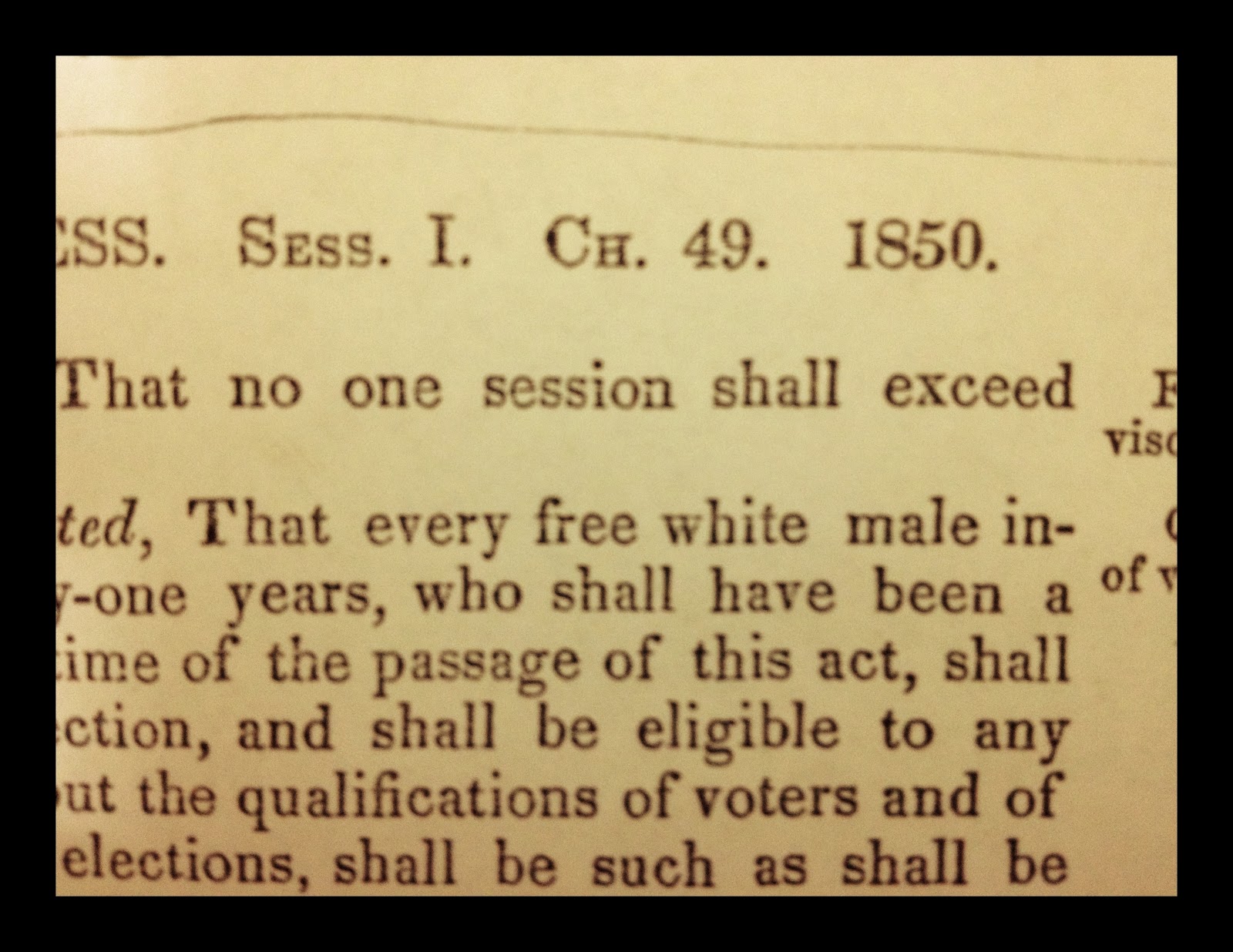
31st US Congress, Chapter 49
September 9, 1850

US Territorial Act for the formation of the Territorial Government of New Mexico, through which the State of Arizona became admitted into the jurisdiction of the United States of America.

Sec. 6.  And be it further enacted, That every free white male inhabitant, above the age of twenty-one years, who shall have been a resident of said Territory at the time of passage of this act, shall be entitled to vote at the first election, and shall be eligible to any office within the said Territory; but the qualifications of voters and of holding office, at all subsequent elections, shall be such as be prescribed by the legislative assembly: Provided, That the right of suffrage, and of holding office, shall be exercised only by citizens of the United States, including those recognized as citizens by the treaty with the republic of Mexico, concluded February second, eighteen hundred and forty-eight.


ORDER TO APPEAR
Before the
National Human Rights Commission of the United States
Arizona Working Group
The Spirit of Justice, the True Light of Law

From Selma to Phoenix, from Civil Rights to Human Rights and, the Rights of Mother Earth!
Asamblea de los Pueblos
May 1, 2010
Phoenix, AZ
*******
Links:
Tlahtokan Aztlan
NAHUACALLI
Embassy of Indigenous Peoples
www.nahuacalli.org
Daughter of Zeus
The Master's Narrative
Memes of Caste and the Anomaly of Histories 
When the Adivasi, Indigenous Peoples of the Indian subcontinent, relate their experiences under the colonizing regimes that have swept their homelands, even references to Alexander the Great are preceded by the invasions of the Aryans and the introduction of the “white” concept of human cultural identity and superiority as the determinant for the caste systems that continue to plague the cultural landscape of India even after five thousand years.

To fast forward to the current dialogue on race and institutionalized racism in US society that was intensified by the 2008 presidential campaign, everyday we see and HEAR echoes of the memes of caste that are reinforced every time the phrase “white people” or “white” is used to describe the European American populations of the United States.  That perpetuation of a caste based society would be completely antithetical to the precepts of the “American Experiment of Democracy,” yet remain embedded in the vernacular of public and private discourse regarding social relationships has roots in the Indo-European histories, but is codified in the US Civil Rights statutes as follows:

United States Code
TITLE 42, CHAPTER 21, SUBCHAPTER I, § 1981.
Equal rights under the law

(a) Statement of equal rights

All persons within the jurisdiction of the United States shall have the same right in every State and Territory to make and enforce contracts, to sue, be parties, give evidence, and to the full and equal benefit of all laws and proceedings for the security of persons and property as is enjoyed by white citizens, and shall be subject to like punishment, pains, penalties, taxes, licenses, and exactions of every kind, and to no other.

The term WHITE CITIZEN is contextualized further by the language of the 14th Amendment to the US Constitution which states:

Section 1. All persons born or naturalized in the United States, and subject to the jurisdiction thereof, are citizens of the United States and of the state wherein they reside.

Thus the connection is made institutionally and culturally via the jurisprudence of the Master's Narrative, between concepts of white citizen and WHITE PERSON, establishing legal personality within the US social construct as a function of relationship to the dominant “white” power structures of rights and obligations.  The anomaly being the Nican Tlacah Indigenous Peoples who supercede the US jurisdiction as sovereign confederations of nations holding treaty relationships with the US and other government states of the world.

Proposal:

The historical moment of transformation which is evident nationally and globally, provides the opportunity to suggest a clarification in terms:

Specifically, TO EXCHANGE use of the term “WHITE”, “white citizen”, and “white person” with the term European-American in the public discourse on race and racism.  If the term “Black” can be correlated with African-American, why cannot the same principle apply for the “whites”?
What prevents us from clarifying one of the terms of the social discourse involved in the experiment in American Democracy and let’s see what happens. After all, the first victims of racism are the racists themselves, for what have they done to their own families and innocent children to produce such a culturally twisted and dehumanized constituency such as "white people" generation after generation?

Shall we collectively continue the experiment in democracy in this hemisphere, without perpetuating the institutionalizing of a continental affirmative action program of racism and superiority for one sector of society, the descendants of the European colonizers of the 15th century?
Huehuecoyotl
Tupac Enrique Acosta

Thursday, June 7, 2012

PROTESTA 20 JULIO, 2012: La Mancha de Don Chente

Los Comités de Defensa del Barrio

VIDEO:
12 de junio de 2012
¡ LA HUELGA DEL PUEBLO !
Luchemos Contra la Separación de Nuestras Familias
¡ No Compre su boleto de deportación !
¡ No Compre boleto a su encarcelamiento !
¡ No Compre Budweiser ni Bud Light !
¡ No Compre boleto al concierto de Chente Fernández !
Manifestamos Nuestro Repudio
A Vicente Fernández
                    
 BOYCOTT
Fecha:             20 de julio del 2012 
Horario:          5:30 PM - 8:00 PM
Lugar:             U.S. Airways Arena 2nd Street y Jefferson
Contacto:       Comités de Defensa del Barrio
TONATIERRA     (602) 314-5870
Dígale al Chente que “NO MANCHE”
Que respete la Huelga del Pueblo
Que no contribuya con dinero a la “bruja” Brewer
Que no contribuya con impuestos al Sheriff Arpaio
Que no siga promoviendo la Bud Light ni La Budweiser
Chente “No Manches”
¡No sigas promoviendo el racismo a nuestra gente!
Ya Se Armo, Ya Se Armo,
El Boicot de la Budweiser Ya Se Armo
Para Mas Información Llamar al (602) 314-5870
Los Comités de Defensa del Barrio son grupos de familias por todo el Valle que se reúnen semanalmente para protegerse mutuamente contra la discriminación, el racismo y el abuso policiaco.
Tenemos talleres semanalmente sobre Conozca Sus Derechos, Clases de Ingles, y Asesoría Legal Gratis por parte de la Firma de Alcock y Asociados.

Si ya esta cansado de ser una victima mas de la SB1070 y la Política Racista del Estado de Arizona lo invitamos todos los Lunes de 6 a 8 P.m. a la Asamblea General de Los Comités de Defensa del Barrio en la 802 N. 7th Street, Phoenix Arizona.  Esquina con la Calle McKinley
Escuche el Programa de Radio
“La Hora de Los CDB’s” 
Todos los Lunes de 4 a 5 de la tarde.
RADIO AM 1190

The TOUGH Sheriff of Maricopa County, Arizona


ONLINE:
Full Text of 32 Page Complaint before the US District Court for the District of Arizona
USDOJ Complaint Against MCSO Arpaio May 10, 2012

Download
LINK to USDOJ PDF File:

MCSO Complaint
*******

TWISTED
 Paragraph 1. "Defendants MCSO and Arpaio pursue a pattern or practice of illegal retaliation against their perceived critics by subjecting them to baseless criminal actions, unfounded civil lawsuits, or meritless administrative actions." 

OBSTINATE
Paragraph 4.
"
The Defendants’ violations of the Constitution and laws of the United States are the product of a culture of disregard in MCSO for Latinos that starts at the top and pervades the organization. MCSO jail employees frequently refer to Latinos as “wetbacks,” “Mexican bitches,” and “stupid Mexicans.” "

UGLY

Paragraph 64.
"
For example, an MCSO officer stopped a Latina woman – a citizen of the United States and five months pregnant at the time – as she pulled into her driveway. After she exited her car, the officer then insisted that she sit on the hood of the car. When she refused, the officer grabbed her arms, pulled them behind her back, and slammed her, stomach first, into the vehicle three times. He then dragged her to the patrol car and shoved her into the backseat. He left her in the patrol car for approximately 30 minutes without air conditioning. The MCSO officer ultimately issued a citation for failure to provide identification. This citation was later changed to failure to provide proof of insurance. The citation was resolved when the woman provided her proof of insurance to the local court.

GRANDSTANDING
Paragraph 104.
"
In a nationally televised interview in 2009, Arpaio stated: 'They hate me, the Hispanic community, because they’re afraid they’re going to be arrested.  And they’re all leaving town, so I think we’re doing something good, if they’re leaving.' "

HATEFUL
Paragraph 107 
"For example, Arpaio received a letter stating '[i]f you have dark skin, then you have dark skin. Unfortunately, that is the look of the Mexican illegals who are here illegally. . . I’m begging you to come over . . . and round them all up.'  
Arpaio labeled the letter as “intelligence," forwarded it to his Deputy Chief of Enforcement Operations and told the Deputy Chief to '[h]ave someone handle this.' " 

Twisted - Obstinate - Ugly - Grandstanding - Hateful
The TOUGH Sheriff of Maricopa County, J. Arpaio


 ###
National Public Radio
July 25 Report from Melendres v. Arpaio


TONATIERRA
February 7, 2012 Memoradum to the US Department of Justice


Wednesday, June 6, 2012

USDOJ Complaint Against Maricopa County, MCSO, Arpaio

Case 2:12-cv-00981-LOA Document 1 Filed 05/10/12  

Thomas E. Perez
Assistant Attorney General
Roy L. Austin, Jr. (IL Bar #6228785)
Deputy Assistant Attorney General
Jonathan M. Smith (DC Bar #396578)
Winsome G. Gayle (NY Bar #3974193)
Sergio Perez (CA Bar #274798)
Jennifer L. Mondino (NY Bar #4141636)
Edward G. Caspar (MA Bar #650566)
U.S. Department of Justice, Civil Rights Division
950 Pennsylvania Avenue, N.W.
Washington, D.C. 20530
(ph) 202-305-4164 / (fax) 202-514-6273,
(email) winsome.gayle@usdoj.gov
Attorneys for the United States

IN THE UNITED STATES DISTRICT COURT FOR THE
DISTRICT OF ARIZONA

United States of America,
Plaintiff,
v.
Maricopa County, Arizona; Maricopa County Sheriff’s Office; and Joseph M. Arpaio, in his official capacity as Sheriff of Maricopa County, Arizona,
Defendants.
No. _________________

COMPLAINT


INTRODUCTION 

1.     The Maricopa County Sheriff’s Office (MCSO) and Sheriff Joseph M. Arpaio (Arpaio) have engaged and continue to engage in a pattern or practice of unlawful discriminatory police conduct directed at Latinos in Maricopa County and jail practices that unlawfully discriminate against Latino prisoners with limited English language skills. For example, Latinos in Maricopa County are frequently stopped, detained, and arrested on the basis of race, color, or national origin, and Latino prisoners with limited English language skills are denied important constitutional protections. In addition, Defendants MCSO and Arpaio pursue a pattern or practice of illegal retaliation against their perceived critics by subjecting them to baseless criminal actions, unfounded civil lawsuits, or meritless administrative actions.


2.     As a result of the pattern or practice of unlawful discrimination, Latinos in Maricopa County are systematically denied their constitutional rights; the relationship between MCSO and key segments of the community is eroded, making it more difficult for MCSO to fight crime; and the safety of prisoners and officers in the jails is jeopardized. Constitutional policing is an essential element of effective law enforcement. MCSO and Arpaio’s conduct is neither constitutional nor effective law enforcement.


3.     Defendant Maricopa County, which is responsible for funding and oversight of MCSO, has failed to ensure that MCSO’s programs or activities comply with the requirements of the Constitution and federal law.


4.     The Defendants’ violations of the Constitution and laws of the United States are the product of a culture of disregard in MCSO for Latinos that starts at the top and pervades the organization. MCSO jail employees frequently refer to Latinos as “wetbacks,” “Mexican bitches,” and “stupid Mexicans.” MCSO supervisors involved in immigration enforcement have expressed anti-Latino bias, in one instance widely distributing an email that included a photograph of a Chihuahua dog dressed in swimming gear with the caption “A Rare Photo of a Mexican Navy Seal.” MCSO and Arpaio’s words and actions set the tone and create a culture of bias that contributes to unlawful actions.


5.     MCSO promotes, and is indifferent to, the discriminatory conduct of its law enforcement officers, as is demonstrated by inadequate policies, ineffective training, virtually non-existent accountability measures, poor supervision, scant data collection mechanisms, distorted enforcement prioritization, an ineffective complaint and disciplinary system, and dramatic departures from standard law enforcement practices.


6.     This Complaint sets out three categories of unlawful conduct: (1) a pattern or practice of discriminatory and otherwise unconstitutional law enforcement actions against Latinos in Maricopa County; (2) discriminatory jail practices against Latino prisoners with limited English language skills; and (3) a pattern or practice of retaliatory actions against perceived critics of MCSO activities.


7.     This action is brought to enforce the First Amendment, Fourth Amendment, and Fourteenth Amendment of the United States Constitution; the Violent Crime Control and Law Enforcement Act of 1994, 42 U.S.C. § 14141; Title VI of the Civil Rights Act of 1964, 42 U.S.C. §§ 2000d to 2000d-7; the Title VI implementing regulations issued by the United States Department of Justice, 28 C.F.R. §§ 42.101 to 42.112; and Title VI contractual assurances.


8.     The United States seeks declaratory and injunctive relief to remedy the Defendants’ violations of the law and to ensure that MCSO implements sustainable reforms establishing police and jail practices that are constitutional. Implementation of constitutional policing practices will enhance public safety for people in Maricopa County.


9. The United States alleges the following:


DEFENDANTS


10.     Defendant Maricopa County Sheriff’s Office (MCSO) is a law enforcement agency in Maricopa County, Arizona. MCSO provides law enforcement throughout the County and operates the county jail system. MCSO is a program or activity that receives federal financial assistance from the United States Department of Justice (DOJ), both directly and as a subrecipient of Maricopa County.

11.     Defendant Joseph M. Arpaio (Arpaio) is the Sheriff of Maricopa County and is responsible for the operation of MCSO, both in its policing and jail operations. Arpaio has signed contractual assurances that MCSO will comply with federal law.

12.     Defendant Maricopa County (the County) is a political subdivision of the State of Arizona. The County is responsible for funding MCSO. The County’s programs and activities receive federal financial assistance, including from DOJ. As a recipient of federal funds, the County is responsible for ensuring—and it has made contractual assurances that it will ensure—that the programs or activities to which it distributes those funds, including programs administered by MCSO, comply with federal law.


BACKGROUND
13.     Maricopa County, Arizona has close to four million residents and is the fourth largest county in the United States by population.


14.     Maricopa County covers more than 9,200 square miles.


15. According to the 2010 census, Maricopa County is 59 percent White, non-Hispanic, 30 percent Hispanic/Latino, 5 percent Black, 4 percent Asian, and 2 percent Native American. The Hispanic population in Maricopa County grew by approximately 47 percent during the period between the 2000 census and the 2010 census.


16.     MCSO employs approximately 900 sworn deputies and 1,800 sworn detention officers (both are referred to as “officers” in this Complaint). It also relies on the services of approximately 3,000 volunteer posse members.

JURISDICTION AND VENUE
17.     This Court has jurisdiction over this action pursuant to 28 U.S.C. §§ 1331 and 1345.


18.     The United States is authorized to initiate this action against Defendants Maricopa County, MCSO, and Arpaio (collectively, “the Defendants”) under the Violent Crime Control and Law Enforcement Act of 1994, 42 U.S.C. § 14141, and Title VI of the Civil Rights Act of 1964, 42 U.S.C. §§ 2000d to 2000d-7, and its implementing regulations, 28 C.F.R. §§ 42.101 to 42.112.


19.     Declaratory and injunctive relief is sought as authorized by 42 U.S.C. § 14141(b) and 28 U.S.C. §§ 2201 and 2202.
20. Venue is proper in the District of Arizona pursuant to 28 U.S.C. § 1391(b). The Defendants are located in Arizona, and all events, actions, or omissions giving rise to these claims occurred in Arizona.
FACTS

I.     MCSO’s Police Practices Unlawfully Discriminate against Latinos in Violation of Their Constitutional and Statutory Rights

21.     In or about 2006, Arpaio decided to turn MCSO into a “full-fledged anti-illegal immigration agency.” Since that time, MCSO has made immigration enforcement one of the highest priorities of its law enforcement efforts.


22.     From at least 2006 and continuing through the present, MCSO officers have unlawfully discriminated against Latinos and otherwise violated their constitutional rights through a broad range of police practices, including the following:
  • a. Unconstitutional and unlawful targeting of Latinos, because of their race, color, or national origin, for pretextual traffic stops during routine enforcement activity, in connection with purported immigration and human smuggling law enforcement activities, and during purported crime suppression operations (suppression sweeps);

  • b. Unconstitutional and unlawful detention of Latino drivers and passengers, because of their race, color, or national origin, to determine immigration status, when there is no lawful basis for the detention;

  • c. Unconstitutional and unlawful searches and seizures of Latinos, because of their race, color, or national origin, during raids of residences suspected of housing undocumented persons; and

  • d. Unconstitutional and unlawful targeting of Latino workers and illegal detention of Latinos, because of their race, color, or national origin, during worksite raids.
23.     These practices, and the Defendants’ discriminatory actions against Latino limited English proficient (LEP) prisoners in MCSO jails (described below), constitute a pattern or practice of conduct that deprives Latinos in Maricopa County of rights, privileges, and immunities secured and protected by the United States Constitution and federal laws.

24.     The Defendants’ intent to discriminate against Latinos is demonstrated not only by the disparate negative impact on Latinos of the discriminatory conduct described above, but by other practices, policies, and statements of the Defendants, including:
  • a. MCSO’s departure from standard law enforcement practices that help to prevent biased policing and ensure constitutional policing; and
  • b. Statements by MCSO leadership and staff denigrating and endorsing the denigration of Latinos.
A. MCSO Targets Latinos on the Roads in a Discriminatory and Otherwise Unconstitutional Manner


25.     MCSO officers unlawfully rely on race, color, or national origin in their enforcement of traffic laws.


26.     Latino drivers are subjected to disparate treatment as compared to similarly situated non-Latino drivers.


27.     This was evidenced by a 2011 study that assessed the incidence of traffic violations by non-Latino and Latino drivers and compared those data to the rates at which MCSO officers stopped non-Latino and Latino traffic violators.


28. For example, in the southwest portion of the County, the study found that Latino drivers are almost four times more likely to be stopped by MCSO officers than non-Latino drivers engaged in similar conduct.


29. In the northwest portion of the County, the study found that Latino drivers are over seven times more likely to be stopped by MCSO officers than non-Latino drivers engaged in similar conduct.


30. Most strikingly, in the northeast portion of the County, the study found that Latino drivers are nearly nine times more likely to be stopped by MCSO officers than non-Latino drivers engaged in similar conduct.


31. This targeting of Latinos for traffic enforcement violates the Fourth Amendment and the Due Process and Equal Protection Clauses of the Fourteenth Amendment.

i.     Unlawful Traffic Stops by the Human Smuggling Unit


32. MCSO discriminates against Latinos through traffic stops made in connection with the immigration enforcement activities of its Human Smuggling Unit (HSU).


33.     HSU is a unit of approximately 15 officers and supervisors whose mission is to “interdict human smuggling loads and drop houses, and conduct investigations that result in the successful prosecution of all suspects under A.R.S. §13-2319.A.” A.R.S. §13-2319.A is Arizona’s criminal human smuggling law.


34.     In pursuing HSU’s mission of interdicting human smugglers, HSU members unlawfully and routinely rely on race, color, or national origin in initiating pretextual stops of vehicles on the roads and highways of Maricopa County.


35.     HSU members exercise significant discretion in determining whom to stop.


36.     Training of HSU members emphasizes highly subjective factors to determine which cars to target for stops and whether to treat passengers in stopped cars as potentially undocumented persons.


37.     The factors described in MCSO deputy training, and relied upon by HSU members, are not reasonably calculated to differentiate between undocumented immigrants and U.S. citizens who are Latino, or Latinos who are otherwise lawfully in the United States. For example, in determining which cars to stop and which people to detain, MCSO officers routinely rely upon factors such as whether passengers look “disheveled” or do not speak English. These criteria, as routinely cited by HSU officers, are insufficient to provide reasonable suspicion that a vehicle contains undocumented persons or to justify the detention of passengers for questioning.

38.     HSU does not collect relevant data or other information that would allow it to assess the efficacy of its methods, or to evaluate whether any HSU officer is engaged in unconstitutional conduct.

39.     Officers are given little meaningful training on procedures to avoid racial profiling and MCSO has no meaningful accountability mechanisms in place.

40.     HSU operates without meaningful policy guidance, despite the high risk of racial profiling from immigration-targeted law enforcement activities. The MCSO Handbook provided to HSU officers contains no guidance on the enforcement of immigration laws or the determination of probable cause for immigration violations in a manner that avoids discrimination based on race, color, or national origin.

41.     As a result, vehicles occupied by Latinos are far more likely to be stopped by HSU officers, as compared to non-Latino drivers and passengers.

42.     HSU officers report low “hit” rates from pretextual stops. The vast majority of people stopped by HSU officers are either United States citizens or are otherwise lawfully present in the United States.

43.     HSU targets not only drivers, but passengers, in an attempt to apprehend both smugglers and the persons who are being smuggled.

44.     HSU officers often unlawfully justify stops of Latino drivers on grounds that are false, contradict their own records, or do not rise to the level of a traffic law violation.

45.     In one instance, HSU officers stopped and detained a Latino driver and Latino passengers for a human smuggling investigation because they “appeared to be laying or leaning on top of each other” and “appeared, disheveled, dirty, or stained clothing [sic].” However, MCSO pictures taken at the scene show neatly dressed passengers sitting comfortably in the rear of the vehicle.

46.     In another instance, MCSO officers stopped a car carrying four Latino men, although the car was not violating any traffic laws. The MCSO officers ordered the men out of the car, zip-tied them, and made them sit on the curb for an hour before releasing all of them. The only reason given for the stop was that the men’s car “was a little low,” which is not a criminal or traffic violation.

47.     In addition to engaging in discrimination in the determination of whom to stop, HSU officers illegally detain Latino passengers to determine immigration status.

48.     Once HSU officers stop a car, and a driver or passenger appears to be Latino, officers will typically question the passenger regarding immigration status and ask for identification. If the passenger cannot produce identification or does not speak English to the officer, the HSU officer routinely will detain the passenger to determine whether the passenger is lawfully in the United States.

49.     Reports by MCSO officers reveal the routine absence of probable cause to arrest passengers. For example, the following factors, in some combination, were listed as the support for probable cause in more than 50 arrest reports: passengers appeared nervous or avoided eye contact; passengers had strong smell of body odor; and passengers had no luggage or personal belongings in the car.

ii.      Unlawful Traffic Stops During Suppression Sweeps


50.     MCSO unlawfully discriminates against Latinos in traffic stops conducted during “crime suppression operations,” commonly known as suppression sweeps.

51.     MCSO has adopted the practice of suppression sweeps—large-scale, resource-intensive operations involving dozens of officers and volunteer posse members—as part of its efforts to enforce immigration laws.

52.     Suppression sweeps are a practice of using a high volume of pretextual traffic stops over a designated period in selected geographic areas in an effort to identify undocumented persons.

53.     MCSO officers exercise significant discretion in determining whom to stop during suppression sweeps.

54.     During these operations, MCSO officers target Latinos, as opposed to non-Latinos, for traffic stops based on their race, color, or national origin. These sweeps result in the systematic violation of the constitutional rights of Latinos.

55.     The suppression sweeps are not based on reliable intelligence or allegations of criminal activity, lack sufficient operational planning, are not subject to meaningful oversight, and are conducted by MCSO officers, along with volunteer posse members, who are given insufficient training or guidance as to the execution of suppression sweeps.

56.     MCSO does not collect relevant data or other information that would allow it to assess the efficacy of these suppression sweeps, or to evaluate whether any officer misconduct occurs during such operations.

57.     Highly subjective criteria are used to determine who is subject to detention pursuant to a pretext traffic stop.

58.     Locations also have been selected for sweeps because of complaints by non-Latino residents that there are Latinos in those areas.

59.     A high percentage of people who are stopped have committed no criminal offense. In one crime suppression sweep, out of 299 stops, only 41 persons were taken into custody. In another, 451 vehicles were stopped and only 53 persons were taken into custody. These rates are typical of all MCSO suppression sweeps.

60.     MCSO suppression sweeps on County roads result in extensive and unjustified seizures, often of dozens of law-abiding Latinos who happen to be in the area in which the operation is taking place.

iii.     Mistreatment of Latinos In the Course of Traffic Enforcement

61.     The unlawful targeting and stopping of Latinos by MCSO officers through routine traffic enforcement activities and immigration-related operations has led to the mistreatment of Latinos.

62.     For example, an MCSO officer stopped a Latina woman – a citizen of the United States and five months pregnant at the time – as she pulled into her driveway.

After she exited her car, the officer then insisted that she sit on the hood of the car. When she refused, the officer grabbed her arms, pulled them behind her back, and slammed her, stomach first, into the vehicle three times. He then dragged her to the patrol car and shoved her into the backseat. He left her in the patrol car for approximately 30 minutes without air conditioning. The MCSO officer ultimately issued a citation for failure to provide identification. This citation was later changed to failure to provide proof of insurance. The citation was resolved when the woman provided her proof of insurance to the local court.

63.     In another instance, during a crime suppression operation, two MCSO officers followed a Latina woman, a citizen of the United States, for a quarter of a mile to her home. The officers did not turn on their emergency lights, but insisted that the woman remain in her car when she attempted to exit the car and enter her home. The officers’ stated reasons for approaching the woman was a non-functioning license plate light. When the woman attempted to enter her home, the officers used force to take her to the ground, kneed her in the back, and handcuffed her. The woman was then taken to an MCSO substation, cited for “disorderly conduct,” and returned home. The disorderly conduct citation was subsequently dismissed.

B. MCSO Targets Latinos in Their Homes and Workplaces for Immigration Enforcement in a Discriminatory and Otherwise Unconstitutional Manner

64.     MCSO, through its specialized units and specialized operations, has targeted Latinos in their homes and in their workplaces in a discriminatory and otherwise unconstitutional manner.

65.     At the same time, MCSO has knowingly failed to implement adequate policies, training, or accountability mechanisms to prevent unlawful discrimination against Latinos.

66.     HSU officers have searched and seized Latinos without cause on the basis of race, color, or national origin in raids of residences.

67.     For example, during a raid of a house suspected of containing human smugglers and their victims, HSU officers went to an adjacent house, which was occupied by a Latino family. The officers entered the adjacent house and searched it, without a warrant and without the residents’ knowing consent. Although they found no evidence of criminal activity, after the search was over, the officers zip-tied the residents, a Latino man, a legal permanent resident of the United States, and his 12-year-old Latino son, a citizen of the United States, and required them to sit on the sidewalk for more than one hour, along with approximately 10 persons who had been seized from the target house, before being released.

68.     The Criminal Employment Squad (CES) is an immigration enforcement unit of approximately 10 MCSO officers that relies primarily on state identity theft laws to interdict undocumented immigrants. CES officers conduct raids at worksites in an effort to arrest undocumented persons who are working without proper authorization. These raids are conducted in a manner that results in the seizure of Latinos without reasonable suspicion.

69.     According to MCSO, CES has conducted 60 raids resulting in 627 arrests since 2006, with the most recent in May 2012.

70.     Virtually all worksite raids have taken place at businesses where the majority of the employees are Latino.

71.     CES officers typically conduct these raids pursuant to search warrants that list specific persons at the worksite who are suspected of being in possession of fraudulent identity documents. They do not ordinarily obtain arrest warrants.

72.     During raids, CES typically seizes all Latinos present, whether they are listed on the warrant or not. For example, in one raid CES had a search warrant for 67 people, yet 109 people were detained. Fifty-nine people were arrested and 50 held for several hours before they were released. Those detained, but not on the warrant, were seized because they were Latino and present at the time of the raid. No legal justification existed for their detention.

73.     In another raid, a U.S.-born Latina was taken into custody for four hours to determine whether she was lawfully in the United States. In response to media inquiries about this incident, Arpaio was quoted as saying: “That’s just normal police work. You sometimes take people in for probable cause for questioning and they’re released.” The only cause for her arrest was that she was Latina and on-site during a raid, reasons insufficient to provide probable cause for the detention.

74.     CES officers ordinarily use unjustified seizures to conduct interviews of all seized persons to determine if they are legally in the country, despite lacking legal justification to detain them. The determination of whether to seize and detain a worker for questioning is impermissibly based on race, color, or national origin. These seizures are not for the limited, legitimate purposes of protecting officers, protecting evidence, or identifying persons listed on the warrant.

75.     For example, during one worksite raid, CES officers demanded to see the identification of a Latino man who was parked in a lot adjacent to the business targeted in the worksite raid, indicating that CES officers questioned the man because he appeared Latino and happened to be in the vicinity of the worksite raid.

76.     The worksite raids are not subject to meaningful oversight, lack sufficient operational planning, and are conducted by MCSO officers who are given insufficient training or guidance as to the execution of worksite raids.

77.     In addition, MCSO does not collect data or other information that would allow it to assess the efficacy of these worksite raids or evaluate whether any officer misconduct occurs during such operations.

78.     MCSO’s treatment of Latino employees in CES worksite raids stands in stark contrast to the treatment of their employers, who are often non-Latino. MCSO officers do not charge or detain business owners whose worksites are raided.


C.     MCSO Has Significantly Departed from Standard Law Enforcement Practices that Protect against Discriminatory Policing

79.     MCSO has failed to develop and implement policies and practices that generally would be expected of law enforcement agencies, and specifically would be expected of law enforcement agencies to protect against discriminatory policing. There is no legitimate law enforcement purpose that explains these failures. These failures are evidence that MCSO’s discrimination against Latinos is intentional.

i.      MCSO Fails to Adopt Basic Policy, Training and Oversight Practices in Connection with HSU and CES

80.     The nature of the specialized work performed by HSU and CES carries with it a high risk of discriminatory conduct. For example, HSU makes heavy use of pretextual traffic stops of Latinos to purportedly interdict human smugglers and their victims; a high number of stops made by HSU result in extended searches and seizures; and HSU’s success is judged by the number of immigration arrests it makes.

81.     Under these circumstances, a law enforcement agency ordinarily would require that a unit engaged in activities with these risks receive more supervision and meaningful policy guidance. By contrast, HSU and CES officers operate under less oversight than other MCSO officers and receive limited written guidance. HSU and CES officers receive no formal training specific to their responsibilities, beyond that received by other MCSO officers. HSU is guided in its high-risk policing by a three-page document.

82.     Arpaio and MCSO leadership promote and are indifferent to the heightened risk of discriminatory conduct that is created by MCSO’s lack of basic policy, training and oversight practices in connection with HSU and CES. The failure to provide such supervision and guidance is evidence of intent to discriminate against Latinos.


ii.     MCSO and Arpaio’s Decision to Prioritize Immigration Enforcement over the Investigation of Rape, Sexual Assault, and other Violent Crime Provides Additional Evidence of Defendants’ Intent to Discriminate against Latinos

83.     MCSO has focused its most intensive law enforcement efforts on low-level immigration offenses over more serious crime from approximately 2006 to the present. MCSO’s prioritization of immigration enforcement has resulted in a failure to meet its other law enforcement responsibilities, and provides further evidence of the Defendants’ intent to discriminate against Latinos.

84.     Statistical reports show an increase in violent crime in Maricopa County, and of homicides in particular, during the period of enhanced immigration enforcement.

85.     MCSO has failed, for example, to adequately respond to reports of sexual violence, including allegations of rape, sexual assault, and sexual abuse of girls, thus exposing women and girls, who constitute the majority of victims of crimes of sexual violence in Maricopa County, to a disproportionate risk of physical and psychological harm.

86.     Faced with such an increase in crime and the risk of harm presented by unaddressed sexual assaults, a law enforcement agency ordinarily would be expected to prioritize more serious offenses, such as crimes of sexual violence, over less serious offenses, such as low-level immigration offenses.

iii.     MCSO and Arpaio’s Ineffective Oversight, Accountability, Training, and Policies Fail to Prevent Unlawful Targeting of Latinos and Provides Additional Evidence of Their Intent to Discriminate Against Latinos

87.     MCSO has inadequate policies and training, and systems of oversight and accountability. These institutional failures persist despite MCSO’s awareness of the risk of discriminatory policing created by MCSO’s program to enforce immigrations laws. MCSO fails to adopt policies and practices to prevent and address discriminatory policing.

88.     MCSO fails to collect data that will permit the identification of discriminatory practices. MCSO has no system in place for effectively tracking deputy or unit conduct, traffic stops, citations, arrests, uses of force, or complaints. These data are collected by many other law enforcement agencies as a means of preventing discriminatory policing.

89.     MCSO’s occasional reliance on its Computer-Aided Dispatch (CAD) system to monitor officer conduct is inadequate since it does not fully track deputy activity. The CAD system does not, for instance, track such information as race or ethnicity, and MCSO officers have wide discretion regarding the use of and information they input into CAD.

90. MCSO’s institutional failures further extend to grossly inadequate procedures for tracking deputy misconduct.

91.     MCSO’s system for investigating complaints of deputy misconduct gives substantial discretion to the supervisor of the deputy who is the subject of the complaint. Supervisors, who may bear some responsibility for that misconduct, are given discretion to close the investigation of the complaint without further notification through the command structure, notification of Internal Affairs, or centralized record keeping.

92.     Neither Internal Affairs nor any other element of the MCSO command structure tracks allegations of deputy misconduct. Consequently, MCSO command staff members often are unaware of repeated complaints made about a deputy.

93.     MCSO practices discourage individuals from filing complaints and fail to collect data that would assist it in identifying and correcting incidents of biased policing.

94.     MCSO has virtually no policies or procedures designed to prevent discriminatory policing by its officers. MCSO nominally forbids racial profiling, but has no policy describing with any degree of specificity what racial profiling is or how to prevent it.

95.     MCSO is fully aware of the risk of discriminatory policing created by its practices. Given that, the lack of adequate training and policies necessary to prevent the discriminatory treatment and abuse of Latinos reveals a disregard for the rights of the Latino community, and stands as further evidence of an intent to discriminate against Latinos.

iv.     MCSO Posses Receive Inadequate Training and Oversight

96.     MCSO has recruited nearly 3,000 volunteer posse members since 1993. MCSO makes use of volunteer posse members in various capacities, including in operations by HSU and CES, and in suppression sweeps.


97.     MCSO has used volunteer posse members in its immigration enforcement actions since 2008. In 2010, it created an “illegal immigration posse.”

98.     Volunteer posse members do not receive the same level of training as sworn MCSO officers. As acknowledged by MCSO policies, posse volunteers are not qualified to participate in routine law enforcement activities.

99.     Nonetheless, MCSO relies on volunteer posse members for immigration enforcement operations. Volunteer posse members assist in the identification and search of vehicles and suspected “drop houses;” the transport of individuals suspected of immigration law violations; the execution of worksite raids by CES; and crowd control during demonstrations against MCSO immigration policies.

100  provides insufficient supervision and oversight to ensure that volunteer posse members taking part in immigration enforcement activities do so without engaging in unlawful discrimination.

D.      MCSO Leadership and Staff Demonstrate Intent to Discriminate against Latinos through Their Public Statements and Endorsement of Anti-Latino Statements

101.     Arpaio and MCSO command staff have created and fostered institutional bias against Latinos, which underlies and further encourages the unlawful treatment of Latinos by MCSO. MCSO’s pervasive bias against Latinos is demonstrated by MCSO command staff’s public expressions of hostility toward Latinos and the Latino community—including public statements by MCSO command staff indicating bias against Latinos, endorsement of and reliance on citizen correspondence evincing animus against Latinos, and emails circulated among MCSO staff indicating bias against Latinos.

102.     Arpaio has made public statements that conflate all Latinos with undocumented individuals and that demonstrate bias toward Latinos and their presence in the United States.

103.     Arpaio voiced his biased opinion of Latinos and Latino culture in a book that he coauthored in 2008. In that book, Arpaio singles out Mexicans and Latinos as different from all other immigrant groups in America. For example, Arpaio states that Latinos maintain “language [,] customs [and] beliefs separate from the mainstream,” and are trying to “reconquest” American soil through their migration to the United States.

104.     In a nationally televised interview in 2009, Arpaio stated: “They hate me, the Hispanic community, because they’re afraid they’re going to be arrested. And they’re all leaving town, so I think we’re doing something good, if they’re leaving.”

105. Such statements convey to MCSO personnel that discrimination and other unlawful conduct against Latinos is acceptable and part of MCSO’s policies or practices.

106.     Arpaio has adopted practices that further convey to MCSO command staff his endorsement of discrimination and other unlawful conduct toward Latinos. Arpaio has circulated letters from constituents and the wider public that express biased sentiments toward Latinos—but which contain no actionable information about criminal activity or immigration-related offenses—to MCSO command staff, along with his annotations on the letters giving instructions to staff to respond with thank-you notes or to maintain copies for his files.

107.     For example, Arpaio received a letter stating “[i]f you have dark skin, then you have dark skin. Unfortunately, that is the look of the Mexican illegals who are here illegally. . . I’m begging you to come over . . . and round them all up.” Arpaio labeled the letter as “intelligence,” forwarded it to his Deputy Chief of Enforcement Operations and told the Deputy Chief to “[h]ave someone handle this.”

108.     Arpaio received a letter endorsing “stopping Mexicans to make sure they are legal” as a police practice, sent a letter of appreciation to its two authors, and kept three copies of the original letter for himself.

109.     Arpaio instructed his senior staff to “look into” a complaint that workers were speaking Spanish in a McDonald’s restaurant.

110.     Similarly, Arpaio maintains an “immigration file,” in which he keeps letters that advocate blatant bias against Latinos.

111.     MCSO supervisory staff also expresses bias and endorses discrimination and other unlawful conduct against Latinos.

112.     MCSO personnel, including MCSO supervisors, have circulated among themselves, on County computers, e-mails mocking or stereotyping Mexicans or Latinos.

113.     For example, an e-mail circulated among MCSO personnel contained an image of an imitation driver’s license with a caricature of a Mexican national described as originating from “Mexifornia” and having a driver class of “illegal alien.”

114.     Still another e-mail sent by a sergeant in MCSO’s HSU suggested that Mexicans are prone to drunkenness.

115. MCSO personnel responsible for prisoners held in MCSO jails routinely direct racial slurs toward Latino prisoners, including calling Latino prisoners “paisas,” “wetbacks,” “Mexican bitches,” “fucking Mexicans,” and “stupid Mexicans.”

116.     MCSO’s Chief of Enforcement acknowledged that the majority of undocumented persons in Maricopa County are Latino and described undocumented persons as “the lowest element in our society.”

II.     MCSO’s Correctional Practices Violate the Constitutional and Statutory Rights of Latino Limited English Proficient Prisoners

117.     Latino Limited English Proficient (LEP) prisoners in MCSO jails routinely suffer harm because of their inability to speak English. This harm is a direct result of MCSO and Arpaio’s intentional failure, since at least 2009 and continuing to the present, to provide necessary Spanish language-assistance services for Latino LEP prisoners and to adequately supervise and train their detention officers.

118.     MCSO and Arpaio failed to provide necessary Spanish language-assistance even though they know that Latino prisoners comprise the vast majority of LEP prisoners in MCSO jails.

119.     MCSO is aware of what is necessary to provide meaningful LEP services in the correctional context.

120.     In a June 14, 2010 Position Statement outlining its policies, MCSO noted the importance of providing language assistance to Latino LEP prisoners, stating that such assistance is “essential to the overall operation of the jails and the safety of the prisoners and officers.”

121.     MCSO is aware of the discriminatory treatment of Latino LEP prisoners in its jails; yet, it allows the jails to continue to operate in a discriminatory manner and fails to take basic, well-established measures to address and correct these matters.

122.     MCSO does not have a written plan in place that addresses how it will provide language assistance to prisoners (nor does it have a plan for addressing language assistance in its police work). The absence of a plan is intentional: the June 14, 2010 Position Statement notes that “MCSO does not have a formal written language assistance plan.” Although MCSO contends that this gives MCSO detention officers flexibility to address inmate language requirements, the absence of a written plan allows the ad hoc, inconsistent, and discriminatory treatment of Latino LEP prisoners to occur.

123.     MCSO’s failure to provide language assistance means that Latino LEP prisoners are denied the services, programs, and activities that MCSO makes available to non-LEP prisoners.

124.     Latino LEP prisoners are penalized by MCSO detention officers for not submitting forms written in English.

125.     MCSO detention officers routinely have refused to accept grievance forms or prisoner request orders (“tank orders”) written in Spanish. Grievance forms provide the means for prisoners to report misconduct by a detention officer. Tank orders provide the means for prisoners to request basic daily services, religious materials, legal research, or information—such as court dates, and other important information.

126.     For example, female Latino LEP prisoners have been denied basic sanitary items. In some instances, female Latino LEP prisoners have been forced to remain with sheets or pants soiled from menstruation because of MCSO’s failure to ensure that detention officers provide language assistance in such circumstances.

127.     MCSO detention officers routinely issue commands only in English.

128.     In some instances, when a Latino LEP prisoner has been unable to understand commands given in English, MCSO detention officers have put an entire area of the jail in lockdown—effectively preventing all the prisoners in that area from accessing a number of privileges because of the Latino LEP prisoner’s inability to understand English, inciting hostility toward the LEP prisoner, and potentially placing MCSO officers and other prisoners in harm’s way.

129.     In other instances, MCSO detention officers have put Latino LEP prisoners in solitary confinement for extended periods of time because of their inability to understand and thus follow a command given in English.

130.     MCSO detention officers routinely make announcements only in English. Some of these are basic announcements informing prisoners, among other things, when it is time for them to go outdoors, receive clothing, or eat.

131.     MCSO detention officers use MCSO’s institutional failure to provide language assistance to take advantage of Latino LEP prisoners.

132.     For example, MCSO detention officers have pressured Latino LEP prisoners to sign “voluntary return” forms without proper language assistance. Once signed, these forms oblige foreign nationals to give up any right to have an immigration hearing, challenge their removal from the United States, speak with an attorney, or otherwise seek a determination permitting them to stay in the United States. Latino LEP prisoners have been compelled by MCSO detention officers to sign this form even when they have pending proceedings that may authorize their continued stay in the United States.

133.     MCSO detention officers have used Spanish-speaking prisoners to interpret for them in non-exigent circumstances, but MCSO makes no determination whether these prisoners have the language competency to interpret.

134.     The use of inmate interpreters risks not only inaccuracy, but also may give the inmate-interpreter access to personal or private information of the LEP inmate and presents a security and safety risk in a detention setting.

135.     Detention officers have received little training or guidance from command staff with regard to providing language assistance to Latino LEP prisoners.

136.     MCSO does not have in place any meaningful system to record or use the language proficiency of its detention officers. Although MCSO has noted that it created a “Foreign Language Skills Roster,” which listed the names of detention officers who self-identified as speaking languages other than English, MCSO has neither assessed the ability of these detention officers to interpret or translate nor provided them with training to provide language services.

137.     The absence of these critical components of a language assistance program is a substantial departure from generally accepted correctional standards.

III.     MCSO Has Retaliated against Perceived Critics of Its Practices in Violation of the First Amendment

138.     Since at least 2006 and continuing to the present, in violation of the First Amendment, MCSO and Arpaio have retaliated against critics of MCSO practices, and particularly MCSO’s immigration practices, in an effort to punish these persons for their criticism and to prevent future criticism.


139.     As recounted below, the filing of unsubstantiated complaints and lawsuits demonstrates the pattern or practice of retaliation for protected speech activity.

140.     The former Chief Deputy, acting on behalf of MCSO and Arpaio, filed five separate complaints with the Arizona State Bar targeting attorneys who spoke out publicly against MCSO and Arpaio. Each of these complaints was dismissed for lack of facts or evidence sufficient to support even the initiation of an investigation.

141.     The former Chief Deputy, acting on behalf of MCSO and Arpaio, filed four complaints with the Arizona Commission on Judicial Conduct targeting judges who had either made public statements critical of MCSO or had issued decisions that Arpaio or MCSO command staff disliked. Each of these complaints was dismissed for lack of facts or evidence to support opening an investigation.

142.     Acting in concert with the former Chief Deputy, Arpaio, and MCSO, a former Maricopa County Attorney filed a lawsuit accusing people who had publicly criticized MCSO of conspiracy in a criminal enterprise. Arpaio participated as a named plaintiff in the lawsuit and substantially contributed to its filing. This case was soon abandoned as unjustified and the responsible attorneys, including former Maricopa County Attorney Andrew Thomas and two of his assistant attorneys, were subsequently charged by the Arizona State Bar for having violated the Arizona Rules of Professional Conduct by bringing the lawsuit.

143.     On April 10, 2012, former Maricopa County Attorney Thomas and his two assistant attorneys were found guilty of the ethics charges. Thomas announced that he was not appealing his disbarment.

144.     MCSO and Arpaio also have used arrests as a means to intimidate and retaliate against persons who have spoken out against their immigration practices. The Opinion and Order in the Thomas ethics matter found, for example: “Sheriff Arpaio, through Chief Deputy Hendershott, closing their eyes to his Constitutional rights, ordered Mr. Stapley [an Arpaio critic] arrested. They never filed any documents or charges but instead surreptitiously videotaped his arrest, and held him in jail for hours. Testimony at the disbarment hearing revealed that no one ever filed anything against Mr. Stapley regarding this event, but the press was called and informed that Mr. Stapley had been arrested.”

145.     The Thomas ethics Opinion and Order also described the treatment of Arpaio critics by Arpaio, Thomas and others as “a concerted effort … to wrestle power from [Maricopa County Board of Supervisors], County officials, and Superior Court judges, and to instill fear in the hearts of those who would resist.” The Opinion and Order concluded that this effort culminated in a “conspiracy” to indict a judge without cause: “Thomas and [assistant county attorney] Aubuchon quietly met with Arpaio and [former Chief Deputy] Hendershott behind closed doors. This shameful gathering had but one motive. The foursome met to conspire about how to muzzle their next most-feared nemesis. After much late-night intrigue by Thomas and Aubuchon, the conclave’s results were revealed the following morning. On December 9th, Thomas and Aubuchon filed criminal charges against Presiding Criminal Judge Gary Donahoe without a shred of evidence that Donahoe had committed any crime.” Judge Donahoe had done nothing more than issue a ruling adverse to MCSO and was perceived to be a critic of Arpaio.

146.     Retaliation was not reserved for officials and judges in Maricopa County, but also extended to individuals perceived as critical of Arpaio and MCSO.

147.     MCSO arrested a peaceful protestor for obstructing a thoroughfare during an act of civil disobedience. The protestor – who has a long history of publicly criticizing MCSO immigration operations – was released.

148.     The protestor then went to observe the continuing protests. Although this critic of MCSO policies was observing the protest without participating, MCSO unlawfully arrested him when Arpaio, who is very familiar with this protestor, publicly suggested that he be arrested a second time. At the arraignment, the prosecuting attorney admitted that there had been no probable cause for the second arrest. The interim County Attorney later dismissed the charges stemming from the second arrest for lack of probable cause.

149.     On repeated occasions, MCSO officers arrested persons who had expressed their disagreement with MCSO immigration policies during the course of County Board meetings by applauding. These arrests were unjustified, as the arrestees did not disrupt the meeting in any meaningful way. Indeed, the judge presiding over the trial of the arrestees found that the arresting MCSO deputy “believes it is his role to make uncomfortable anyone who express[es] views that disagree with the Sheriff” and that Arpaio’s officers had “trampl[ed] on the First Amendment.” The court acquitted the arrestees on its own motion at the close of the State’s case.

150.     Another critic of Arpaio was arrested for engaging in protected speech, and was subsequently acquitted. Despite the acquittal, Arpaio explicitly stated that “[i]n the same circumstance, he would be arrested again,” making clear that retaliation, rather than legitimate law enforcement, motivates Arpaio’s treatment of his critics.

151.     These actions, taken by MCSO and Arpaio, have deterred and are likely to deter persons from engaging in protected speech.

IV.     MCSO Is a Recipient of Federal Financial Assistance

152.    At all relevant times described in this Complaint, the Defendants have been and continue to be recipients of federal financial assistance from the Department of Justice, either directly or through another recipient of federal financial assistance.

153.     The County has received grants from the DOJ Office of Justice Programs (OJP). MCSO has been and is a subrecipient of grants that the County has received from OJP. MCSO is also a subrecipient of grants from other recipients of federal financial assistance from OJP.

154.     MCSO has received grants from the DOJ component Community Oriented Policing Services (COPS).

155.     MCSO participates in the DOJ Equitable Sharing Program, which is administered by the DOJ Criminal Division, Asset Forfeiture and Money Laundering Section (AFMLS).

156.     As a condition of receiving federal financial assistance, the County, through its authorized representatives, certified that it agreed to comply with all requirements imposed by Title VI and the federal regulations implementing Title VI.

157.     Title VI and its implementing regulations prohibit intentional discrimination on the grounds of race, color, or national origin in any of a grant recipient’s or subrecipient’s operations, and they prohibit methods of administration that have the effect of subjecting individuals to discrimination because of their race, color, or national origin, or have the effect of defeating or substantially impairing accomplishment of the objectives of the grant recipient’s or subrecipient’s operations with respect to individuals of a particular race, color, or national origin.

158.     The assurances signed by the County bind subsequent recipients and subgrantees, including MCSO, to which the County disburses the funds. The County is responsible for ensuring that subsequent recipients and subgrantees comply with the requirements of Title VI and its implementing regulations.

159.     As a condition of receiving federal financial assistance, MCSO, through its authorized representatives, including Arpaio, agreed to comply with all requirements imposed by Title VI and its implementing regulations.

160.     On December 15, 2011, the United States notified the Defendants that they had failed to comply with Title VI, its implementing regulations, and related contractual assurances, and that this lawsuit would follow if compliance could not be achieved by voluntary means.

161.     Between December 15, 2011, and April 3, 2012, the United States sought to engage with the Defendants in an effort to achieve voluntary compliance with Title VI, its implementing regulations, and contractual assurances, as well as to resolve the other constitutional deficiencies identified in the December 15, 2011 letter. These efforts were unsuccessful.

162.     The United States has determined that all administrative requirements have been exhausted and that securing compliance from the Defendants cannot be achieved by voluntary means. Accordingly, the United States has provided the Defendants’ with a Notice of Intent to File Civil Action. See Exhibits A, B, and C.

CLAIMS FOR RELIEF 

163.     The United States is authorized under 42 U.S.C. § 14141(b) to seek declaratory and equitable relief to eliminate a pattern or practice of law enforcement officer conduct that deprives persons of rights, privileges, or immunities secured or protected by the Constitution or laws of the United States.

164.     The United States is authorized under Title VI to seek declaratory and equitable relief and/or the termination of federal funds to ensure that no person shall be excluded from participation in, be denied the benefits of, or be subjected to discrimination under any program or activity receiving federal funding on the basis of race, color, or national origin.

FIRST CLAIM FOR RELIEF:
DEFENDANTS’ LAW ENFORCEMENT POLICIES AND PRACTICES
VIOLATE 42 U.S.C. § 14141 AND THE FOURTEENTH AMENDMENT

165.     Plaintiff re-alleges and incorporates by reference the allegations set forth in paragraphs 1-164, above.

166.     The Defendants, their agents, and persons acting on their behalf, including MCSO officers, have engaged in law enforcement practices, including traffic stops, workplace raids, home raids, and jail operations, with the intent to discriminate against Latino persons in Maricopa County on the basis of their race, color, or national origin.

167.     The discriminatory law enforcement practices engaged in by the Defendants, their agents, and persons acting on their behalf constitute a pattern or practice of conduct by law enforcement officers that deprives persons of rights protected by the Due Process and Equal Protection Clauses of the Fourteenth Amendment of the United States Constitution, in violation of 42 U.S.C. § 14141(a).

SECOND CLAIM FOR RELIEF:
DEFENDANTS’ SEARCHES, ARRESTS, AND DETENTIONS
VIOLATE 42 U.S.C. § 14141 AND THE FOURTH AMENDMENT

168.     Plaintiff re-alleges and incorporates by reference the allegations set forth in paragraphs 1-164, above.

169.     The Defendants, their agents, and persons acting on their behalf, including MCSO officers, have unreasonably searched, arrested, and detained numerous persons in Maricopa County, including searches and arrests without probable cause or reasonable suspicion.

170.     The unreasonable searches, arrests, and detentions lacking probable cause or reasonable suspicion engaged in by the Defendants, their agents, and persons acting on their behalf constitute a pattern or practice of conduct by law enforcement officers that deprives persons of their rights under the Fourth Amendment, in violation of 42 U.S.C. § 14141(a).

THIRD CLAIM FOR RELIEF:
DEFENDANTS’ TREATMENT OF LATINOS VIOLATES TITLE VI

171.     Plaintiff re-alleges and incorporates by reference the allegations set forth in paragraphs 1-164, above.

172.     The Defendants received and continue to receive federal financial assistance for their programs and activities.

173.     The Defendants have engaged in law enforcement practices that are unjustified and have an adverse disparate impact on Latinos.

174.     The Defendants have engaged in law enforcement practices with the intent to discriminate against Latinos on the basis of their race, color, or national origin.

175.     The Defendants’ discriminatory law enforcement practices, and intentional discrimination, independently violate Title VI and the Title VI implementing regulations.

FOURTH CLAIM FOR RELIEF:
DEFENDANTS’ TREATMENT OF LATINO LEP PRISONERS
VIOLATES TITLE VI

176.     Plaintiff re-alleges and incorporates by reference the allegations set forth in paragraphs 1-164, above.

177.     The Defendants received and continue to receive federal financial assistance for their programs and activities.

178.     The Defendants have excluded limited English proficient (LEP) Latino prisoners from participation in, denied LEP Latino prisoners the benefits of, and intentionally subjected LEP Latino prisoners to discrimination under Defendants’ programs and activities relating to the operations of the Maricopa County jails on the basis of those persons’ race, color, or national origin.

179.     The Defendants’ treatment of Latino LEP prisoners is unjustified and has an adverse disparate impact on Latinos.

180.     The Defendants’ discriminatory treatment of LEP individuals violates Title VI, and the Title VI implementing regulations.

FIFTH CLAIM FOR RELIEF:
DEFENDANTS’ TREATMENT OF LATINOS
VIOLATES THE TITLE VI ASSURANCES

181.     Plaintiff re-alleges and incorporates by reference the allegations set forth in paragraphs 1-164, above.

182.     The Defendants signed contractual assurance agreements with the United States that all of their programs and activities would be conducted in compliance with all the requirements of Title VI and its implementing regulations.

183.     The Defendants’ intentional discrimination against Latinos and Latino LEP prisoners violates Title VI and its implementing regulations.

184.     The Defendants’ unjustified policing and jail practices that have an adverse disparate impact on Latinos and Latino LEP prisoners violate Title VI and its implementing regulations.

185.     The Defendants therefore have violated their Title VI contractual assurances.

SIXTH CLAIM FOR RELIEF:
DEFENDANTS’ RETALIATION AGAINST THEIR CRITICS
VIOLATES 42 U.S.C. § 14141 AND THE FIRST AMENDMENT

186.     Plaintiff re-alleges and incorporates by reference the allegations set forth in paragraphs 1-164, above.

187.     The Defendants, their agents, and persons acting on their behalf, including MCSO officers, have retaliated against persons in Maricopa County on the basis of protected speech and thereby chilled future protected speech.

188.     The retaliation against protected speech and the chilling of future protected speech engaged in by the Defendants, their agents, and persons acting on their behalf constitute a pattern or practice of conduct by law enforcement officers that deprives persons of their rights under the First Amendment of the United States Constitution, in violation of 42 U.S.C. § 14141(a).

PRAYER FOR RELIEF

189.     WHEREFORE, the United States prays that the Court:

190.     Declare that the Defendants have engaged in a pattern or practice of conduct by MCSO law enforcement officers that deprives persons of rights, privileges, or immunities secured or protected by the Constitution or laws of the United States, in violation of 42 U.S.C. § 14141(a);

191.     Declare that the Defendants have excluded persons from participation in, denied persons the benefits of, or subjected persons to discrimination under programs or activities receiving federal financial assistance, on the basis of race, color, or national origin, in violation of Title VI;

192.     Order the Defendants, their officers, agents, and employees to refrain from engaging in any of the predicate discriminatory acts forming the basis of the pattern or practice of unlawful conduct described herein;

193.     Order the Defendants, their officers, agents, and employees to adopt and implement policies, procedures, and mechanisms to remedy the pattern or practice of unlawful conduct described herein, and by specifically addressing, inter alia, the following areas: policies and training; non-discriminatory policing and jail operations; stops, searches, and arrests; response to crimes of sexual violence; posse operations; jail operations; supervision; misconduct complaint intake, investigation, and adjudication; retaliation; oversight and transparency; and community engagement; and

194.     Order such other relief as the interests of justice may require.

DATED: May 10, 2012

Thomas E. Perez
Assistant Attorney General

Roy L. Austin, Jr.
Deputy Assistant Attorney General

Jonathan M. Smith (DC Bar #396578)
Chief, Special Litigation Section 

/s/ Winsome G. Gayle
Winsome G. Gayle (NY Bar #3974193)
Sergio Perez (CA Bar #274798)
Jennifer L. Mondino (NY Bar #4141636)
Edward G. Caspar (MA Bar #650566)
Trial Attorneys
U.S. Department of Justice, Civil Rights Division
950 Pennsylvania Avenue, N.W.
Washington, D.C. 20530
Tel. (202) 305-4164/Fax (202) 514-6273
winsome.gayle@usdoj.gov
Attorneys for the United States

Case 2:12-cv-00981-LOA Document 1 Filed 05/10/12 
*******

LINK to USDOJ PDF File:

MCSO Complaint